Escape From The Cannibal Bird
Categories
Installation
Collaborators
Solo Project
Material
Wood, Paper
Keywords
Concealment Mobility Adaptive Shelter Hostile Environment Partial Visibility Metaphor
Year
2022
The project began with Hitchcock’s The Birds, not simply as a cinematic reference, but as a metaphor for the external world when it becomes hostile, irrational, and difficult to negotiate. I was interested in the feeling of being exposed to a threat that is everywhere yet unstable, and in the question of how one might survive within such a condition. Must one retreat completely, remain partially visible, or actively construct new forms of camouflage and resistance?
The project began with Hitchcock’s The Birds, not simply as a cinematic reference, but as a metaphor for the external world when it becomes hostile, irrational, and difficult to negotiate. I was interested in the feeling of being exposed to a threat that is everywhere yet unstable, and in the question of how one might survive within such a condition. Must one retreat completely, remain partially visible, or actively construct new forms of camouflage and resistance?
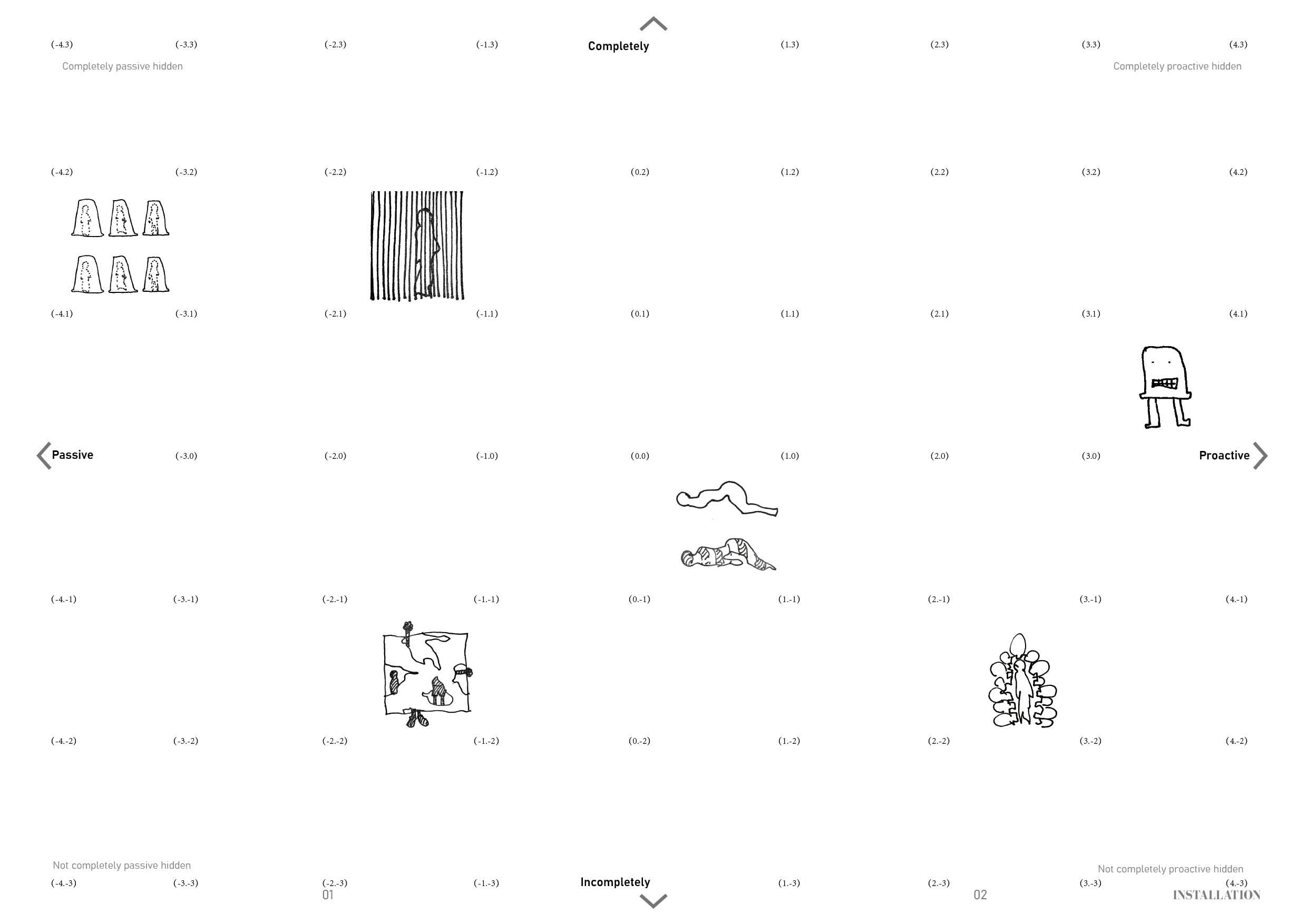
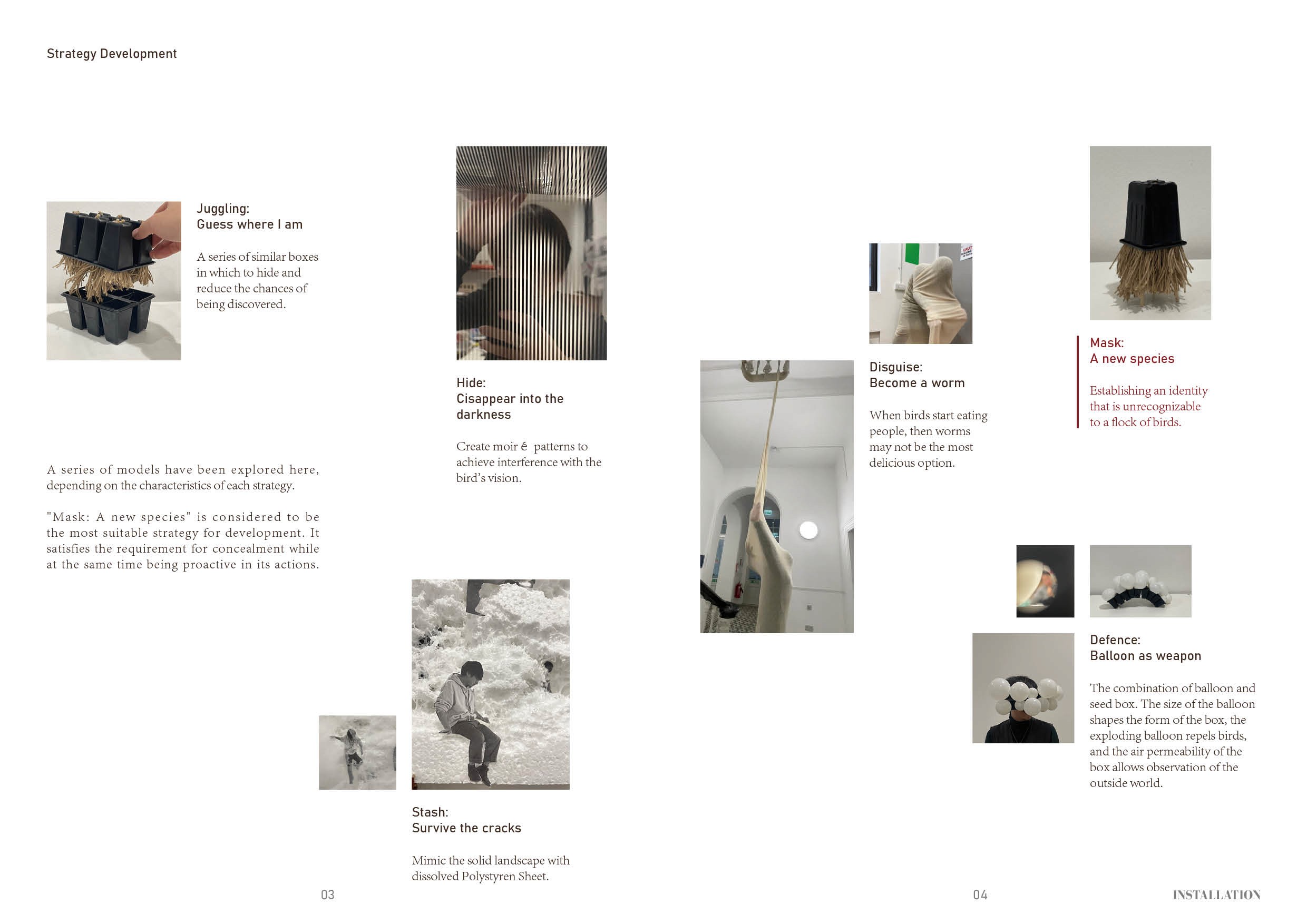
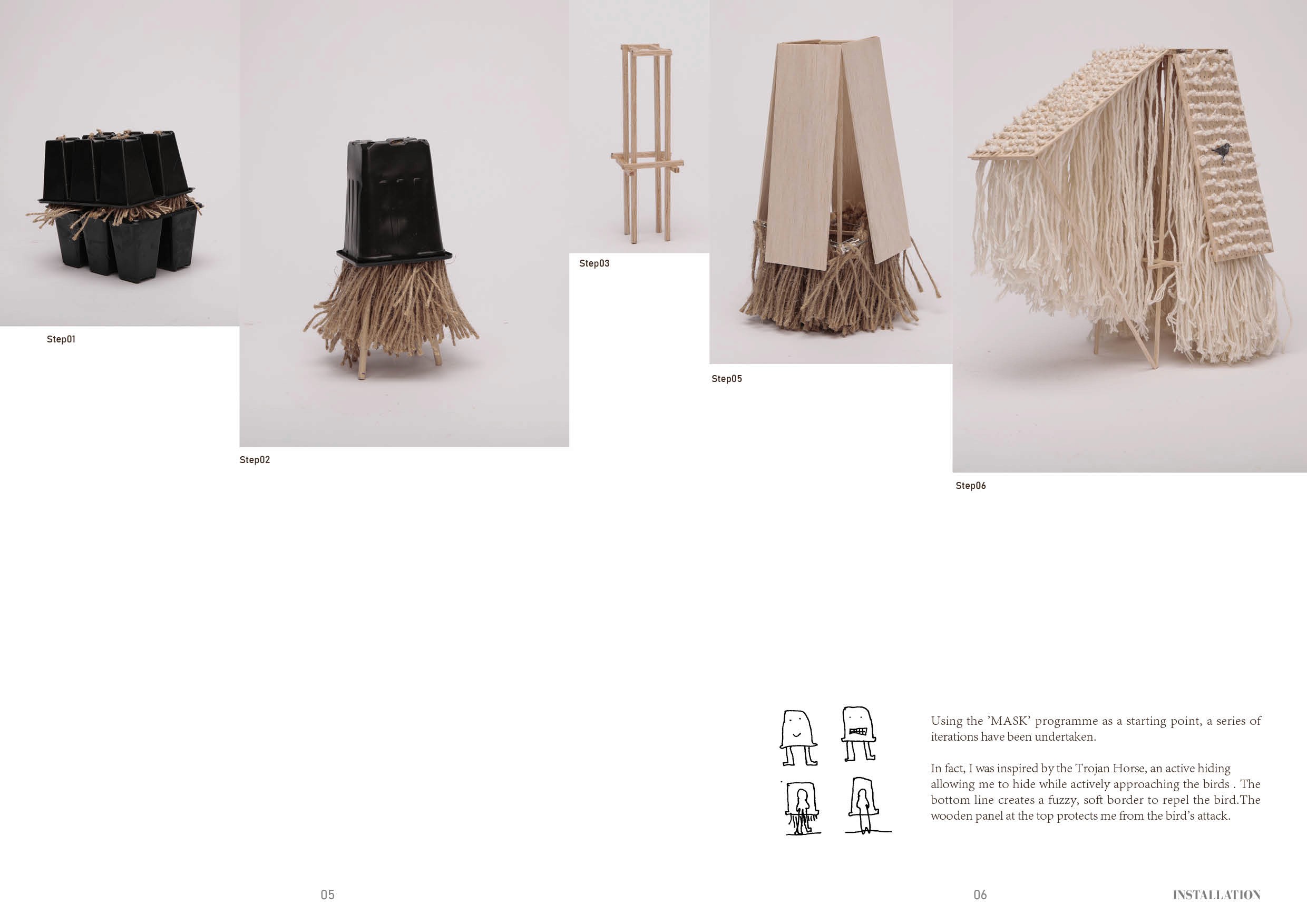
From this question, I developed a series of strategic propositions organised around different modes of hiding and acting: passive or proactive, complete or incomplete. These positions were tested through diagrams, small models, and formal iterations. Among them, the “mask” strategy became the most productive, as it allowed concealment while still retaining agency. The project gradually shifted from a conceptual mapping of survival tactics to the design of a movable spatial prototype capable of buffering, disguising, protecting, and observing at the same time.
From this question, I developed a series of strategic propositions organised around different modes of hiding and acting: passive or proactive, complete or incomplete. These positions were tested through diagrams, small models, and formal iterations. Among them, the “mask” strategy became the most productive, as it allowed concealment while still retaining agency. The project gradually shifted from a conceptual mapping of survival tactics to the design of a movable spatial prototype capable of buffering, disguising, protecting, and observing at the same time.
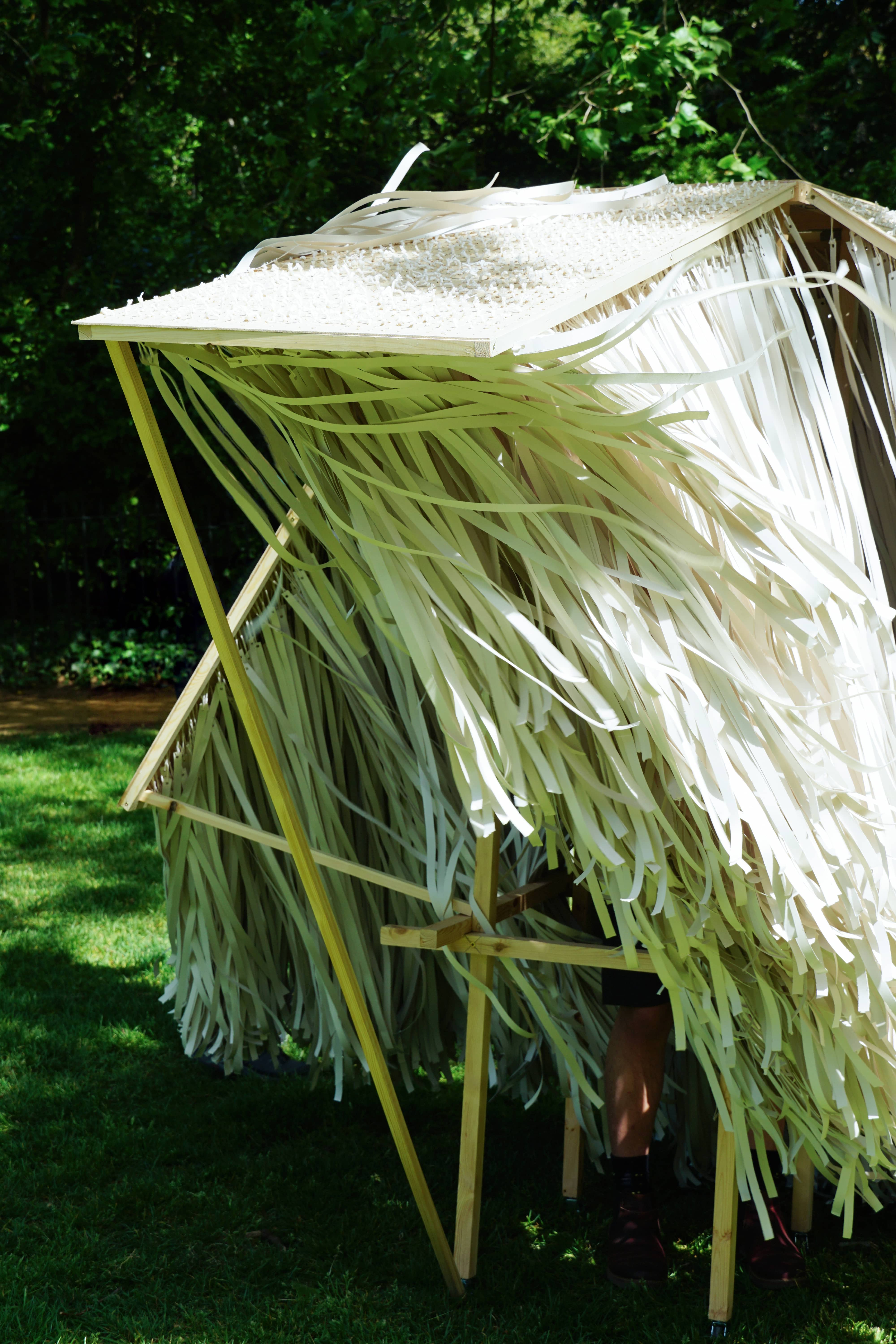
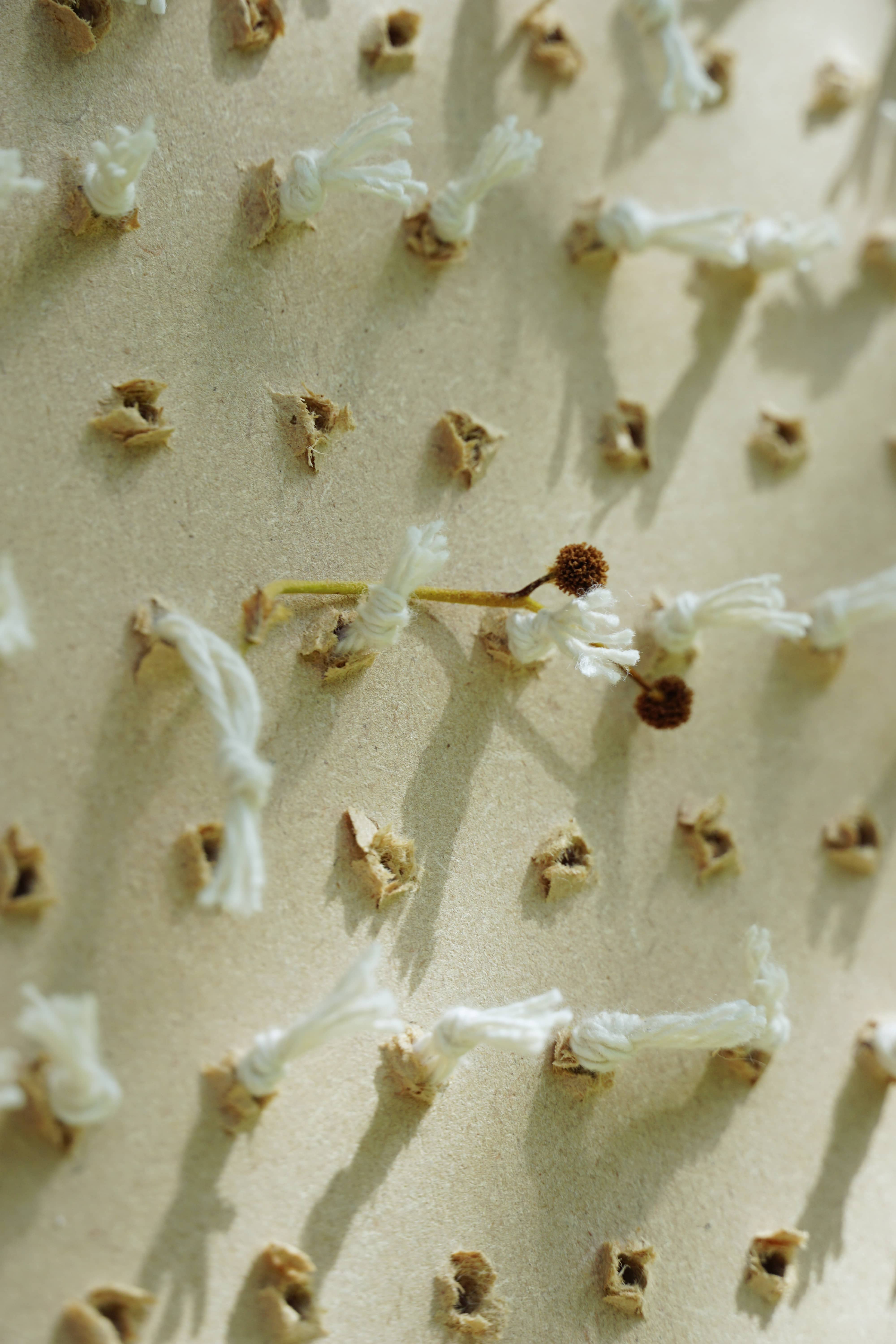
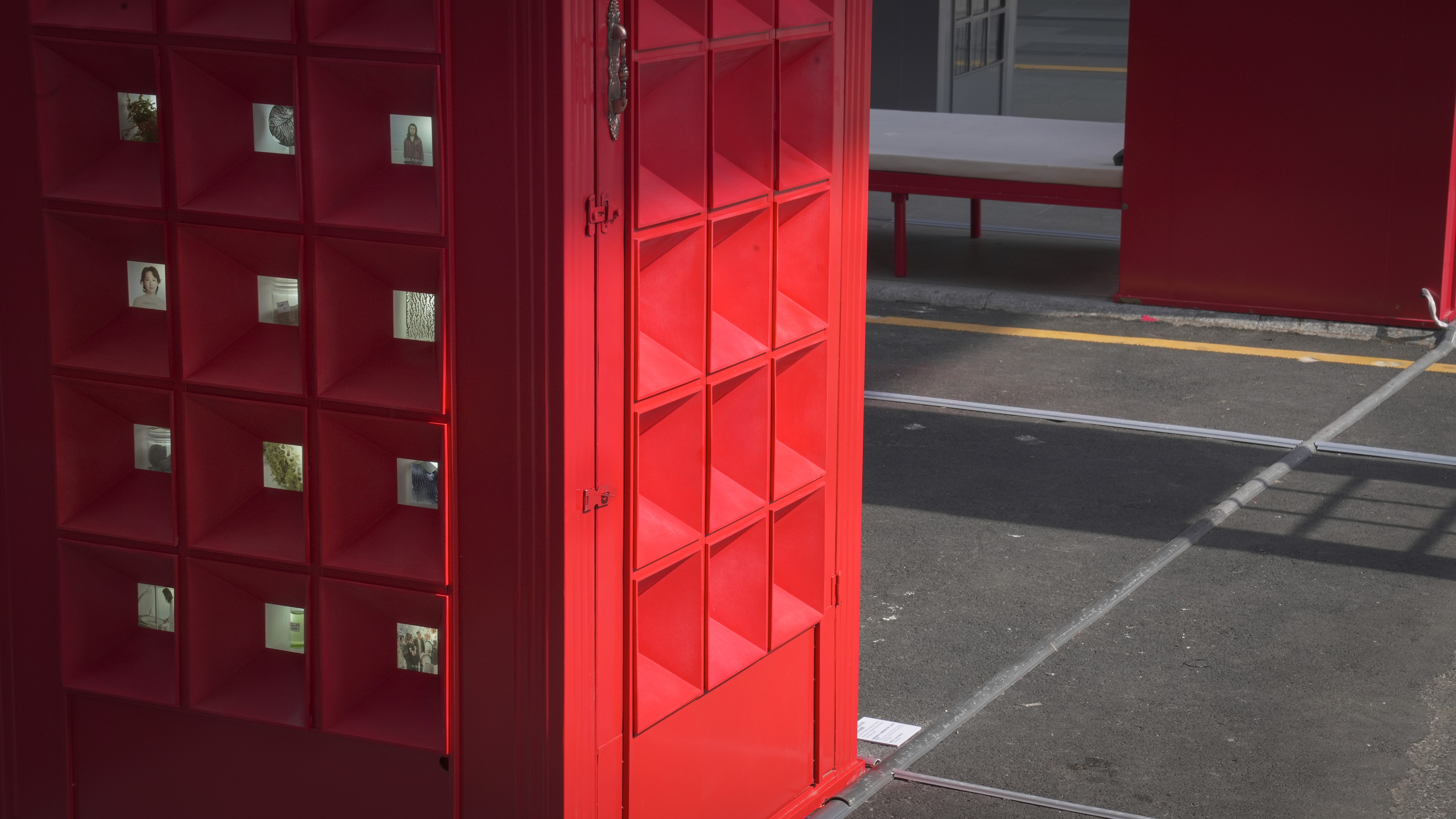
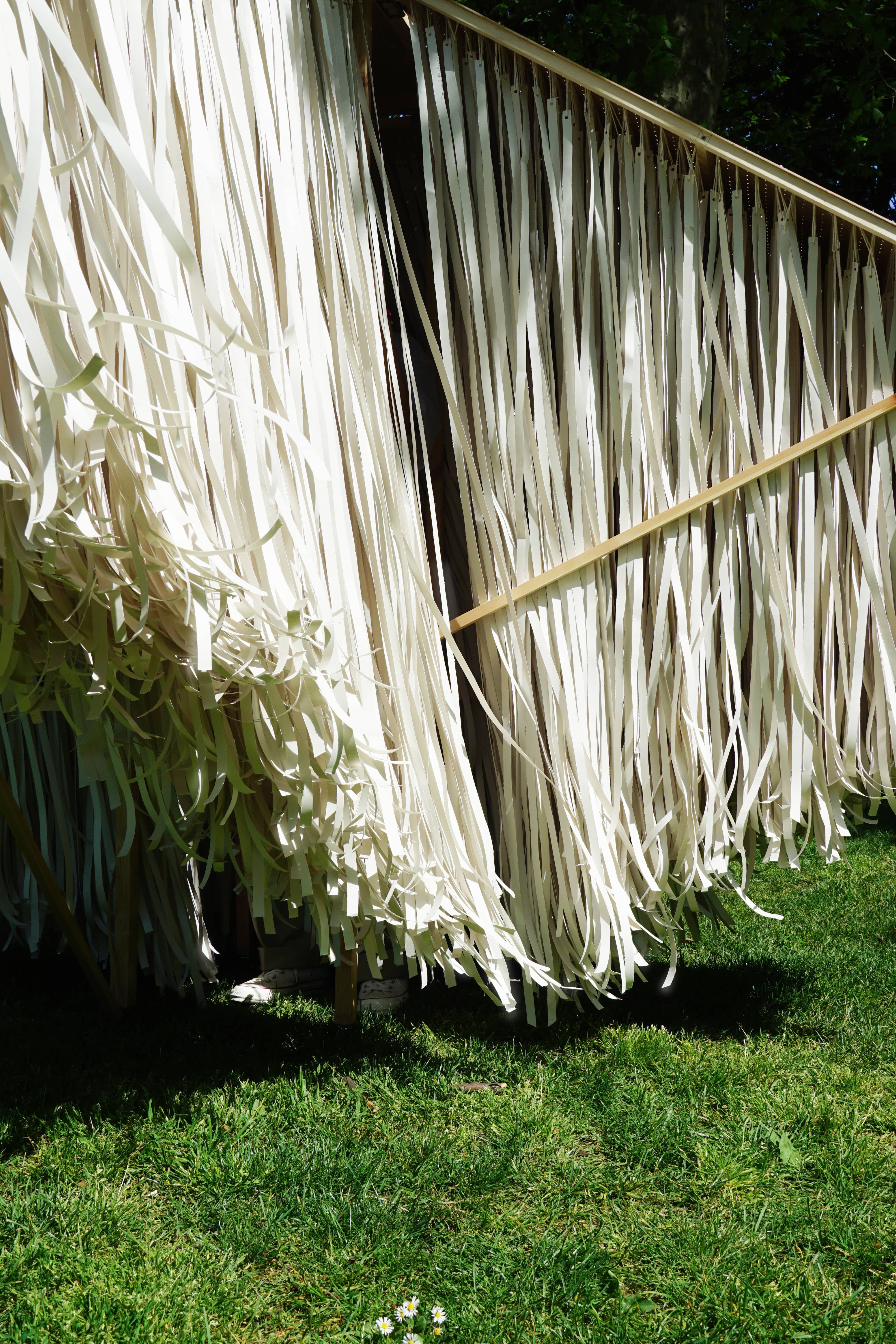
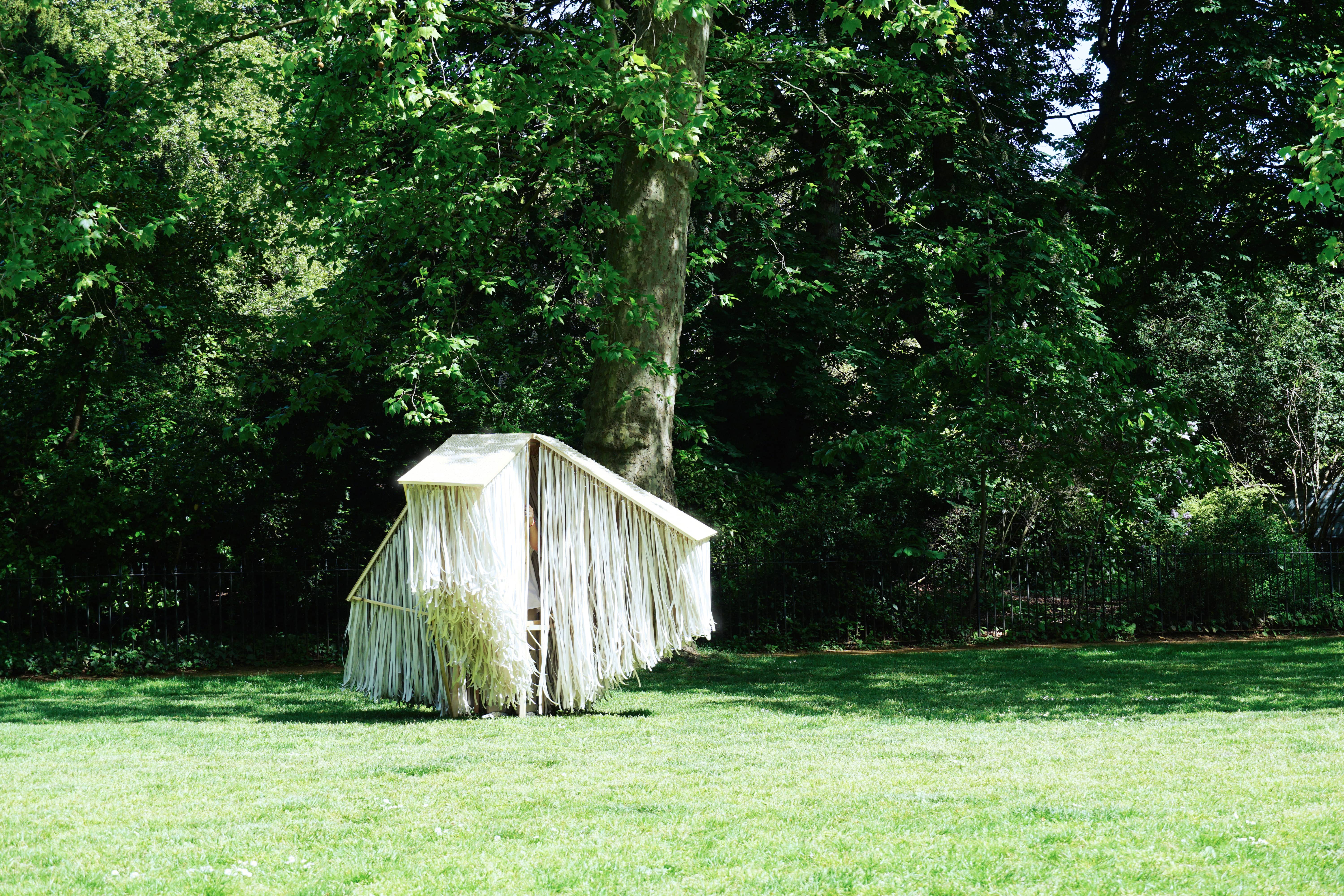
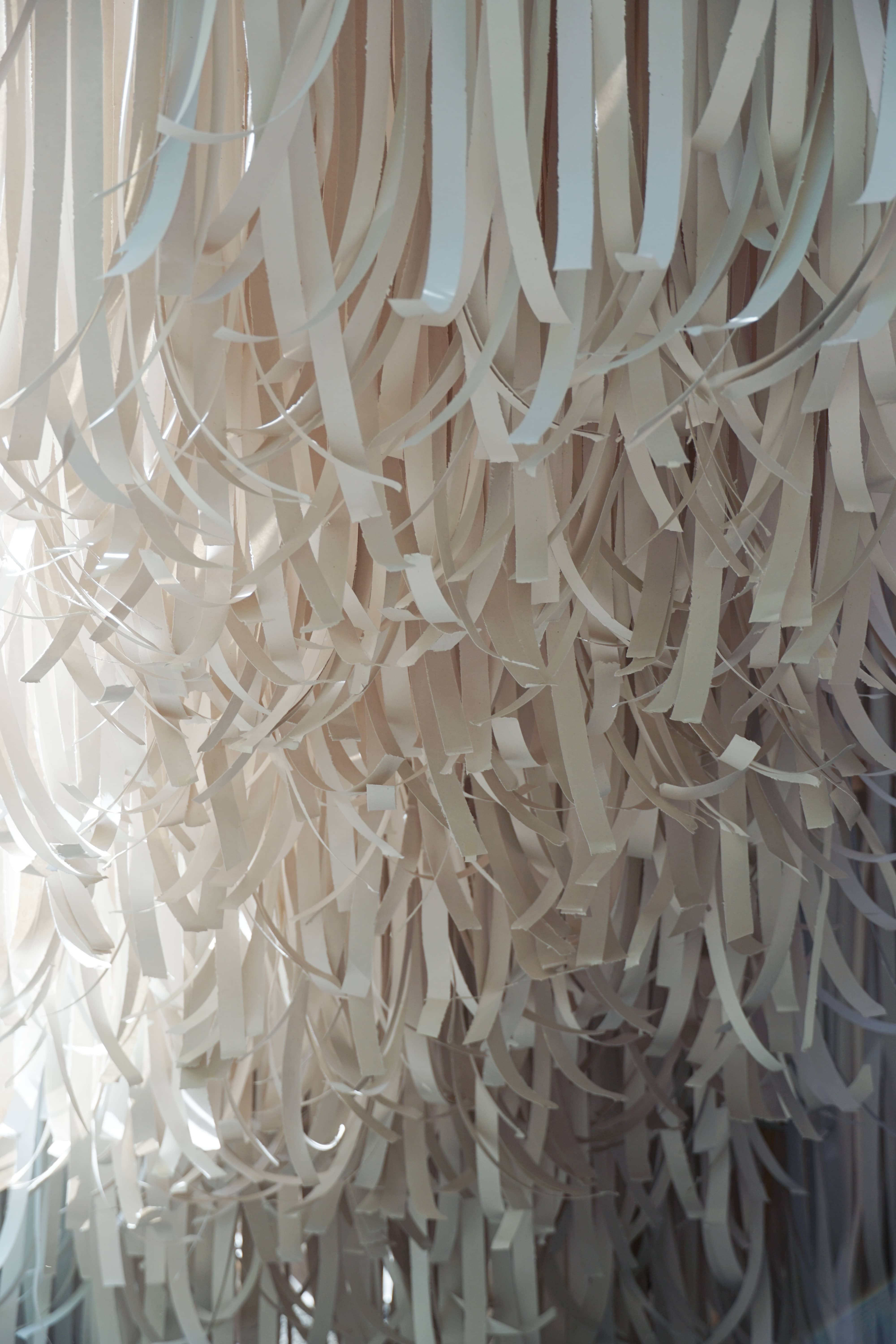
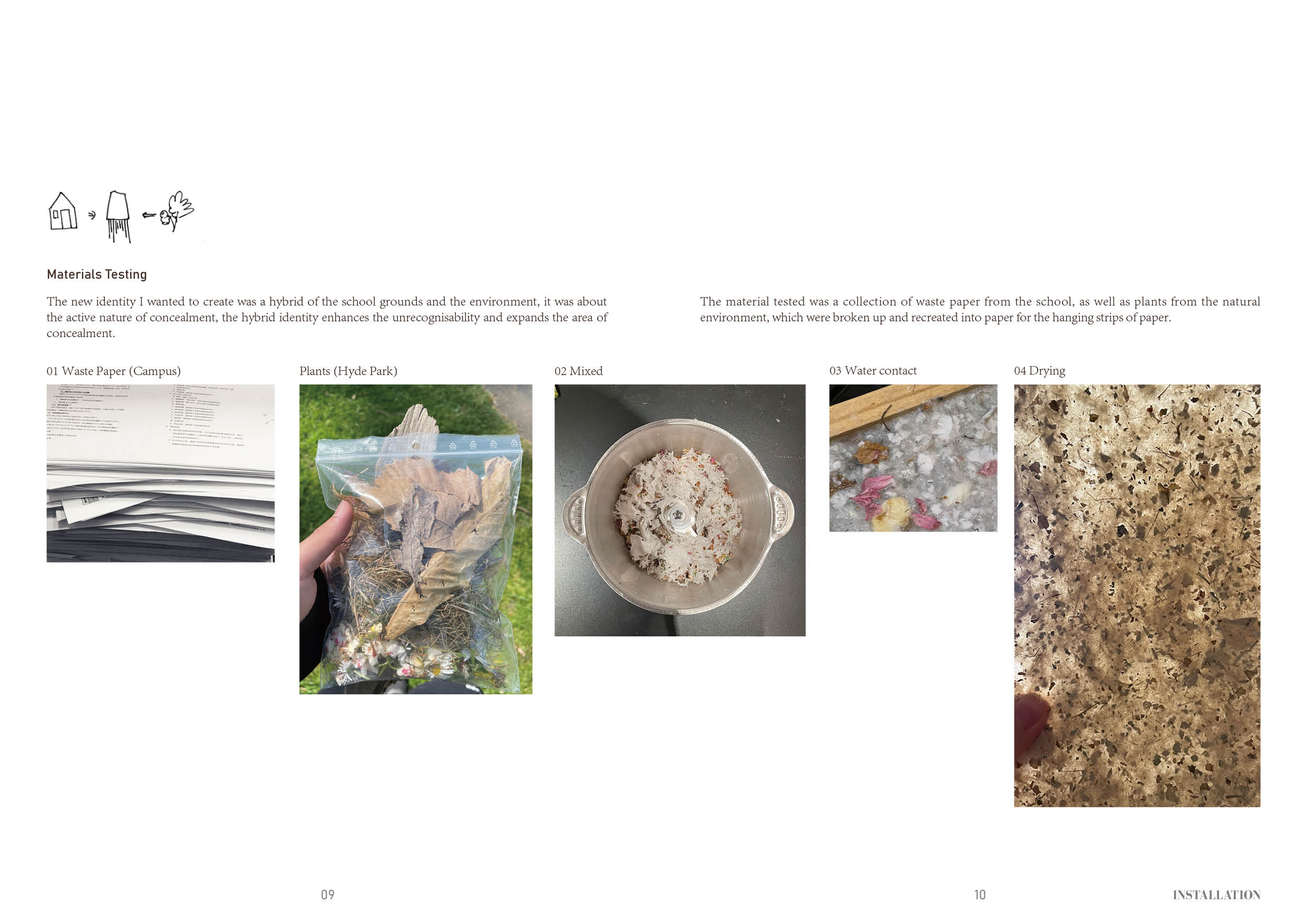
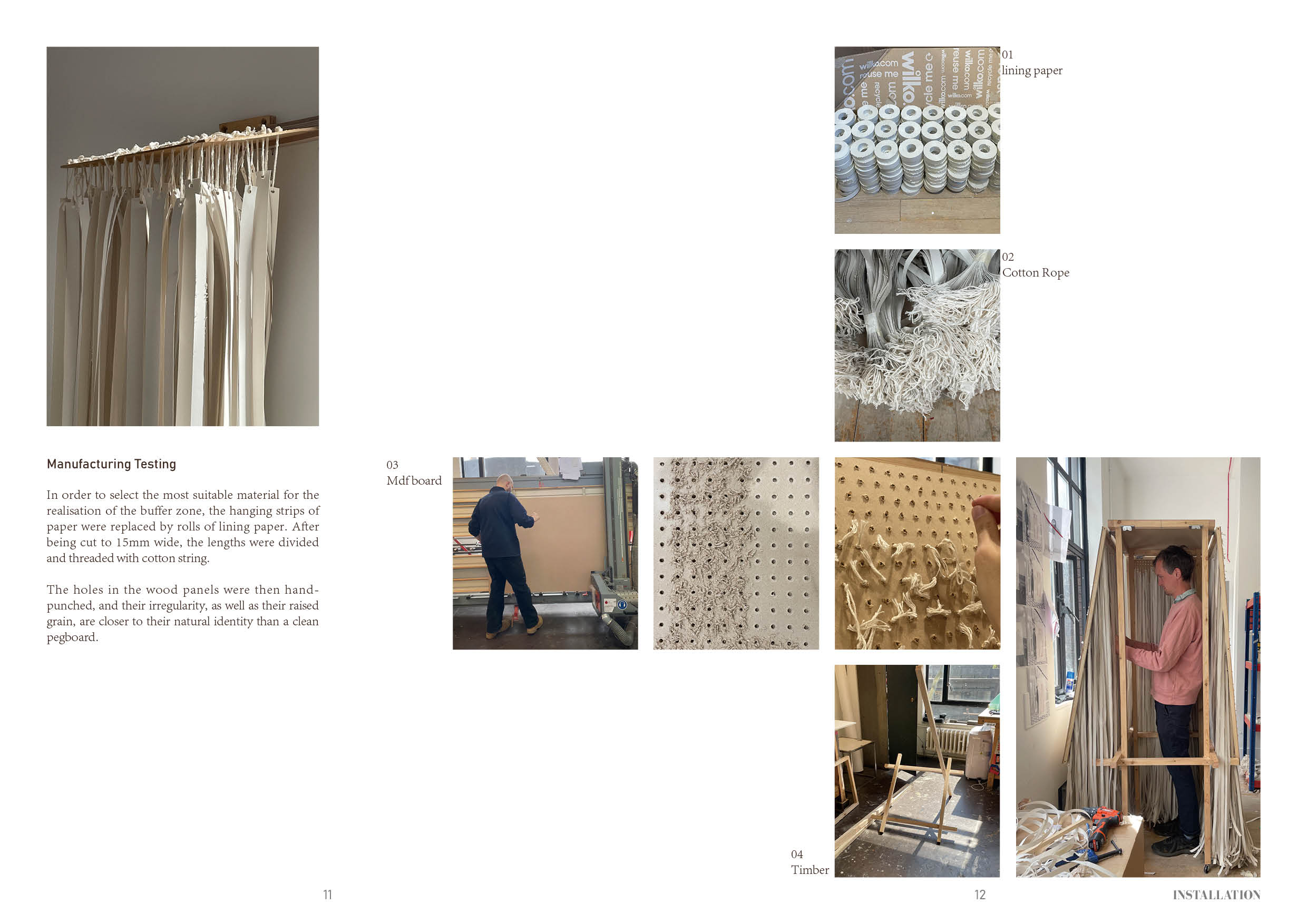
The final installation proposes a mobile shelter that can respond to changing environmental conditions through different degrees of openness. Timber panels form a protective shell, while hanging paper strips create a soft and ambiguous outer layer that blurs boundaries with the surroundings. In its closed state, the structure offers maximum concealment while maintaining limited visual access through small openings; in its open state, the released strips expand its hidden zones and allow the environment to reshape its appearance. The work ultimately imagines escape not as a single act of departure, but as a continuous negotiation with exposure, vulnerability, and transformation.
The final installation proposes a mobile shelter that can respond to changing environmental conditions through different degrees of openness. Timber panels form a protective shell, while hanging paper strips create a soft and ambiguous outer layer that blurs boundaries with the surroundings. In its closed state, the structure offers maximum concealment while maintaining limited visual access through small openings; in its open state, the released strips expand its hidden zones and allow the environment to reshape its appearance. The work ultimately imagines escape not as a single act of departure, but as a continuous negotiation with exposure, vulnerability, and transformation.