Care in Company
Categories
Social Design
Collaborators
Yuanmeng Li
Material
Digital
Keywords
Ageing Pet Economy Care Network Community Service Retirement Shared Space
Year
2020
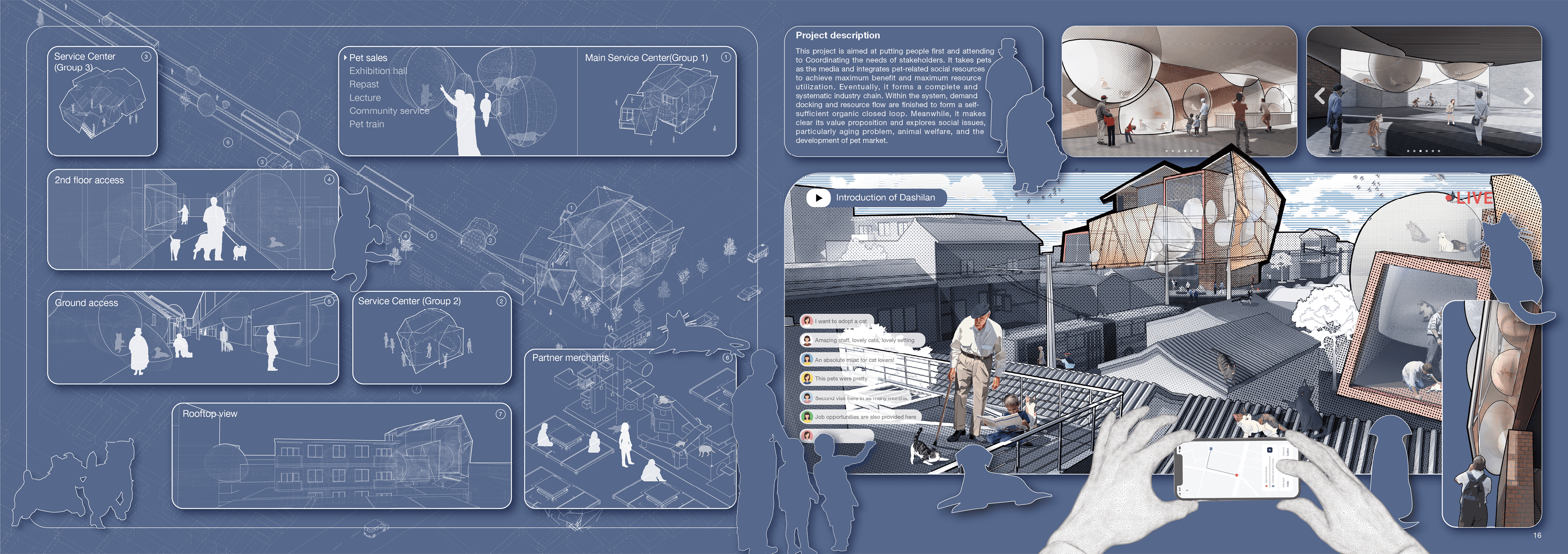
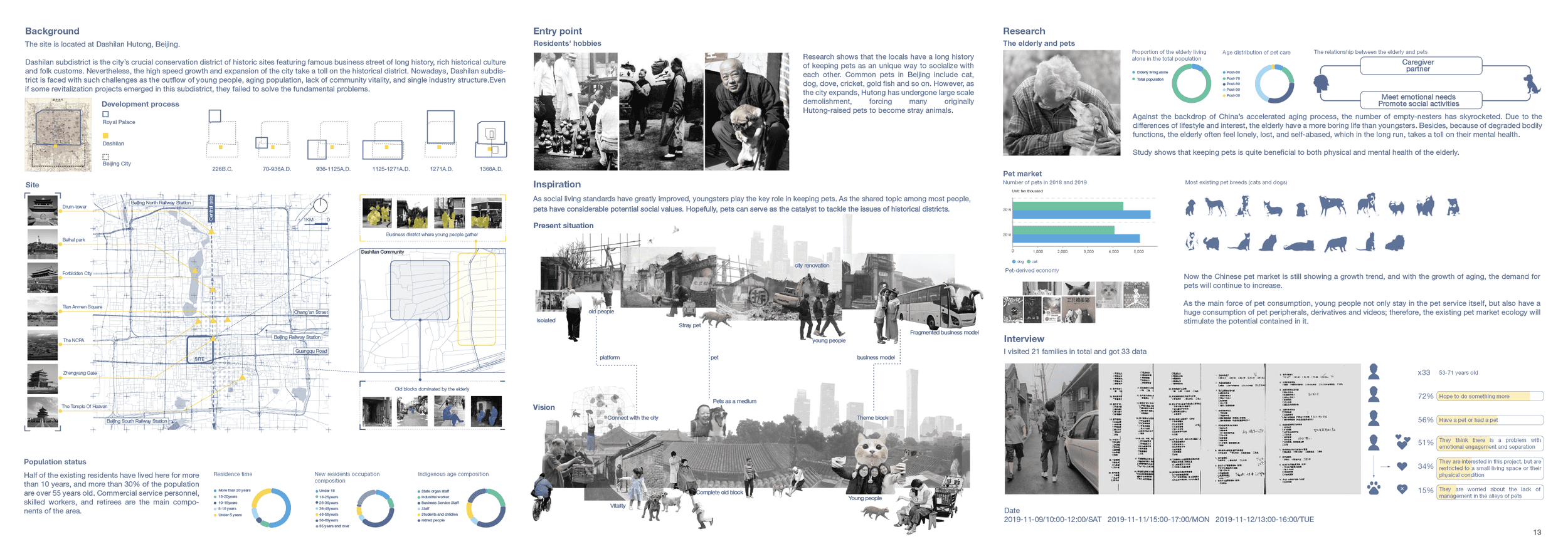
The project began with the observation of two parallel social conditions: an increasing retired population and the rapid expansion of the pet economy. We were interested in whether these two conditions could be connected in a way that was not superficial or purely commercial. Instead of seeing ageing only through decline, the project asks whether retirement might also be understood as a period for new forms of participation, care, and social contribution.
The project began with the observation of two parallel social conditions: an increasing retired population and the rapid expansion of the pet economy. We were interested in whether these two conditions could be connected in a way that was not superficial or purely commercial. Instead of seeing ageing only through decline, the project asks whether retirement might also be understood as a period for new forms of participation, care, and social contribution.
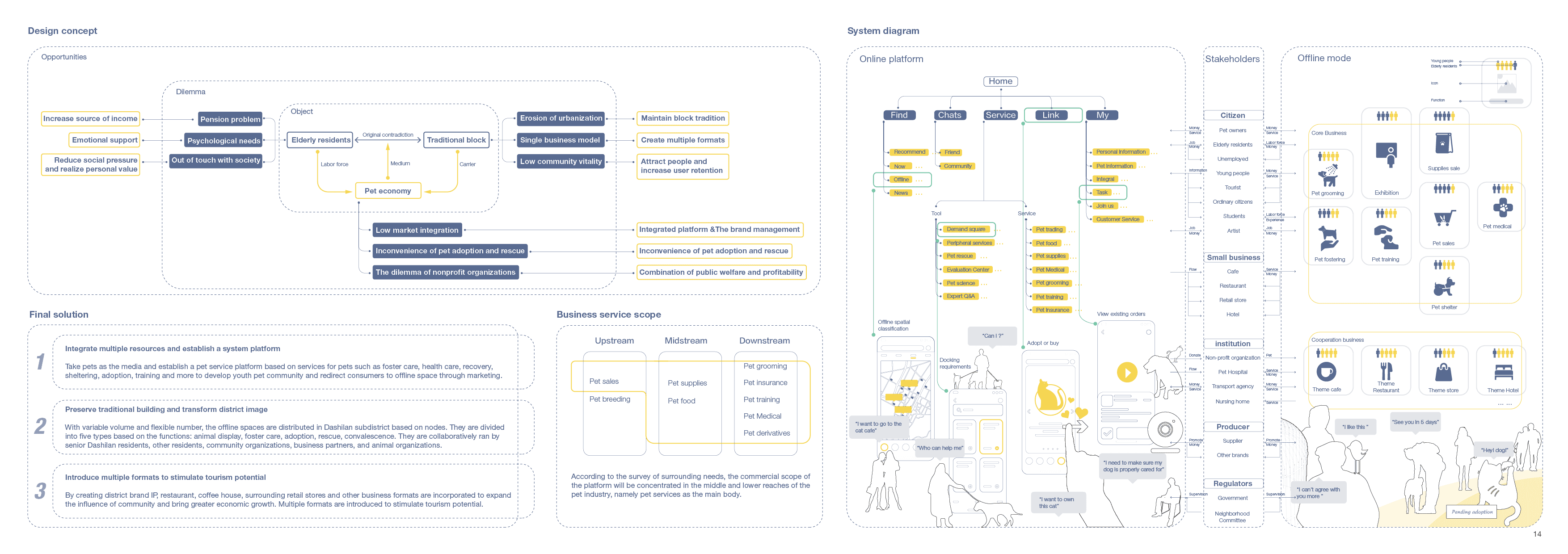
From this perspective, the proposal explores how older adults might become active participants within pet-related service systems. This could include companionship, daily pet care, temporary fostering, neighbourhood support, or other forms of light but meaningful engagement. The key idea is not simply to assign tasks, but to build a service framework in which emotional needs, social interaction, and practical contribution can support one another.
From this perspective, the proposal explores how older adults might become active participants within pet-related service systems. This could include companionship, daily pet care, temporary fostering, neighbourhood support, or other forms of light but meaningful engagement. The key idea is not simply to assign tasks, but to build a service framework in which emotional needs, social interaction, and practical contribution can support one another.
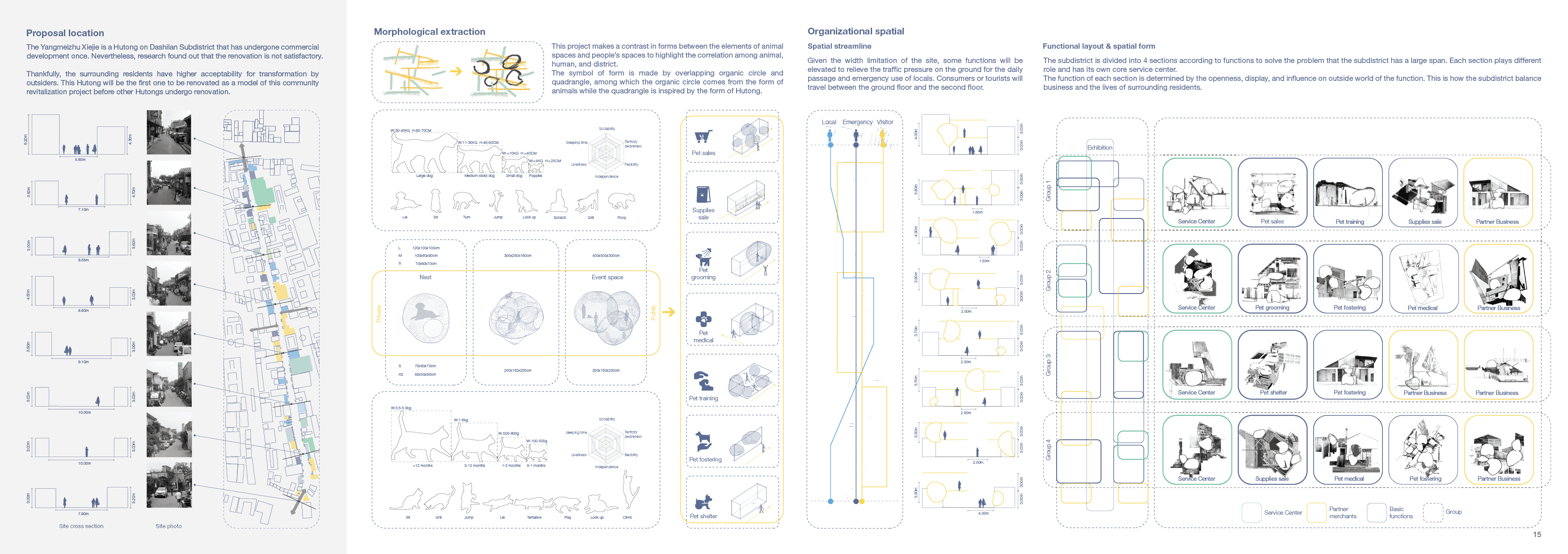
The spatial dimension of the project supports these service relationships by creating environments for meeting, care, rest, and exchange. Rather than designing a single-purpose facility, the project imagines a more flexible shared space where elderly participants, pets, and community members can interact through everyday routines. In this way, space becomes part of the service ecology, helping transform care from a private burden into a visible and shared social practice.
The spatial dimension of the project supports these service relationships by creating environments for meeting, care, rest, and exchange. Rather than designing a single-purpose facility, the project imagines a more flexible shared space where elderly participants, pets, and community members can interact through everyday routines. In this way, space becomes part of the service ecology, helping transform care from a private burden into a visible and shared social practice.