Between Families
Categories
Architecture
Collaborators
Solo Project
Material
Digital
Keywords
Extended Family Atomised Society Rural Dwelling Memory of Home Intergenerational Living Spatial Negotiation
Year
2020
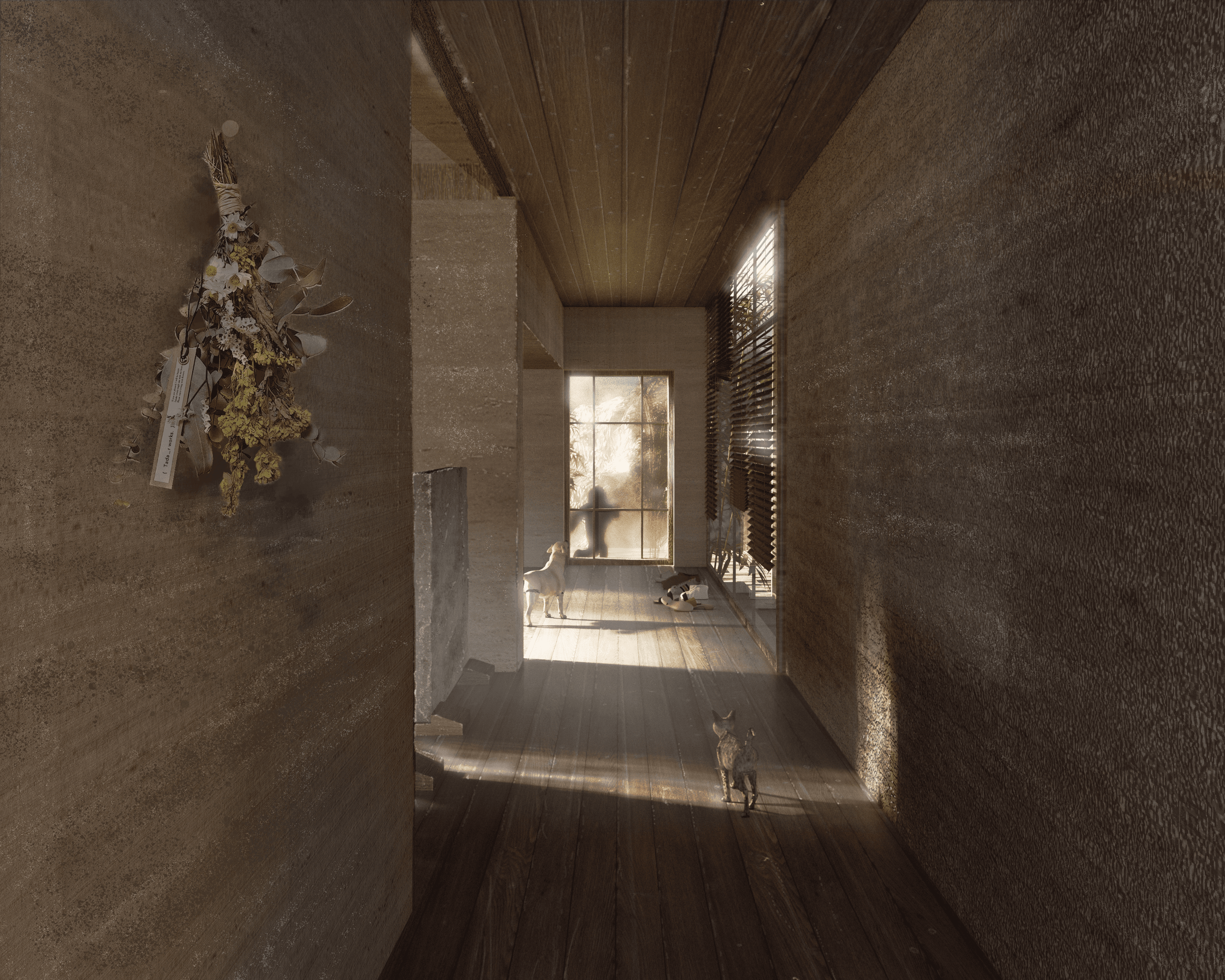
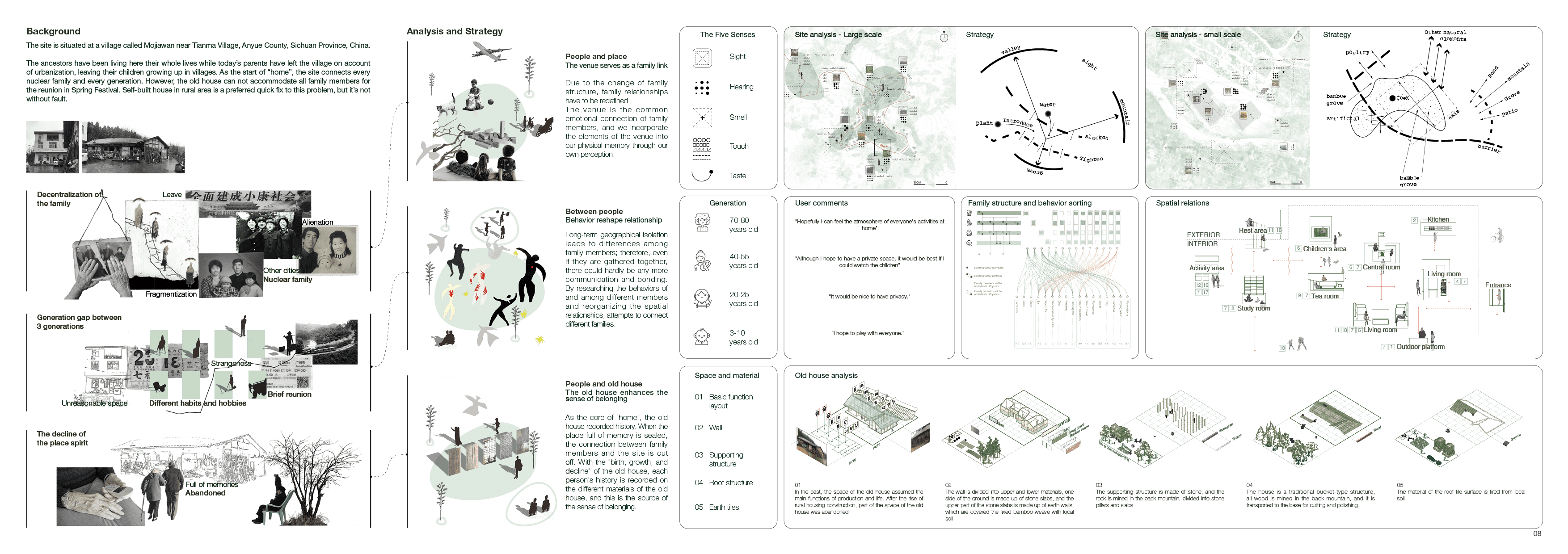
The project began with the transformation of the rural family under contemporary social conditions. As younger generations leave for the city and nuclear families become the dominant unit, the traditional large family house no longer accommodates everyday life in the same way. What remains, however, is not only a building, but a place of return — especially during moments such as the Spring Festival — where memory, belonging, and family identity are still concentrated.
The project began with the transformation of the rural family under contemporary social conditions. As younger generations leave for the city and nuclear families become the dominant unit, the traditional large family house no longer accommodates everyday life in the same way. What remains, however, is not only a building, but a place of return — especially during moments such as the Spring Festival — where memory, belonging, and family identity are still concentrated.
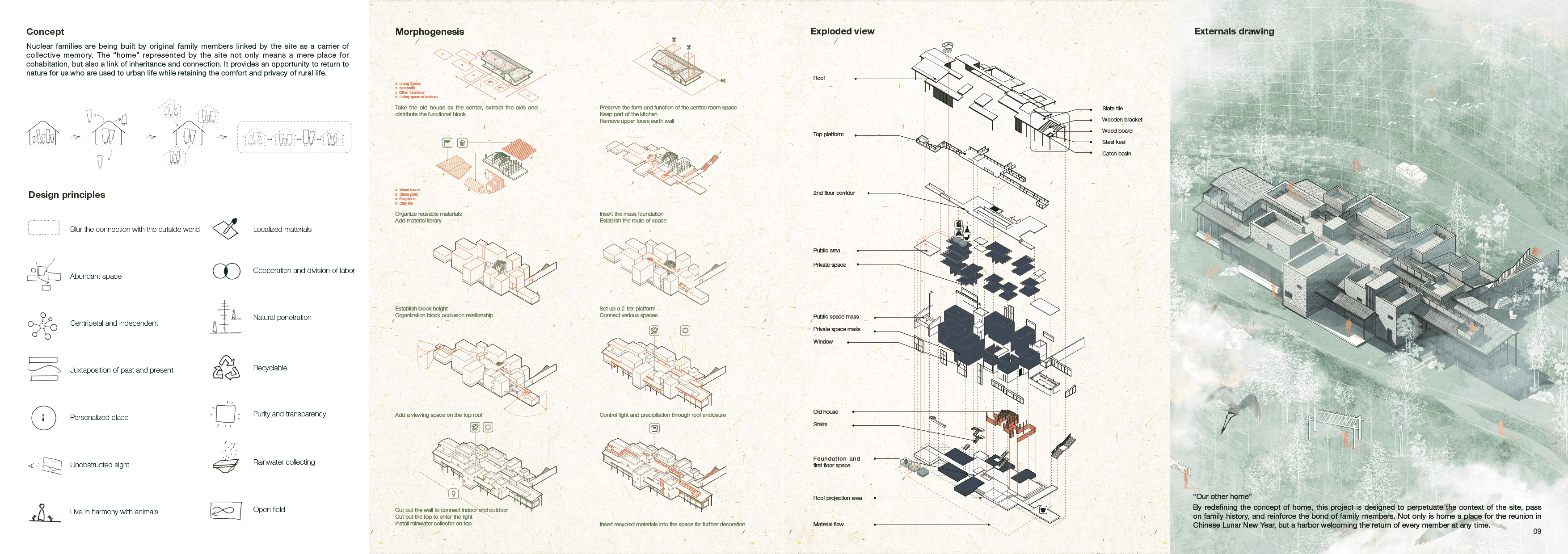
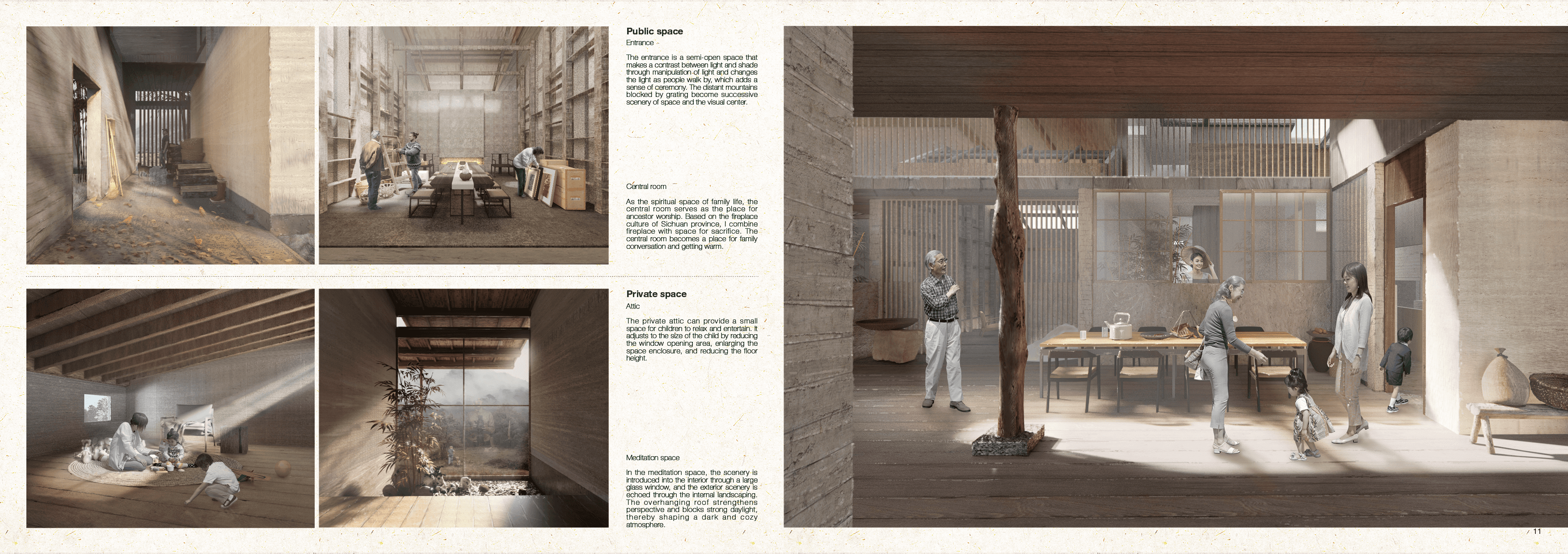
Based on this condition, the project treats the old house as the emotional and mnemonic centre of the site. Instead of erasing it, the design preserves and reinterprets it, while distributing new living units, shared spaces, and transitional areas around it. This organisation allows family members to gather without collapsing all boundaries, and to remain connected without giving up privacy. The house becomes not a single fixed form, but a system of relationships between generations, routines, and modes of inhabitation.
Based on this condition, the project treats the old house as the emotional and mnemonic centre of the site. Instead of erasing it, the design preserves and reinterprets it, while distributing new living units, shared spaces, and transitional areas around it. This organisation allows family members to gather without collapsing all boundaries, and to remain connected without giving up privacy. The house becomes not a single fixed form, but a system of relationships between generations, routines, and modes of inhabitation.
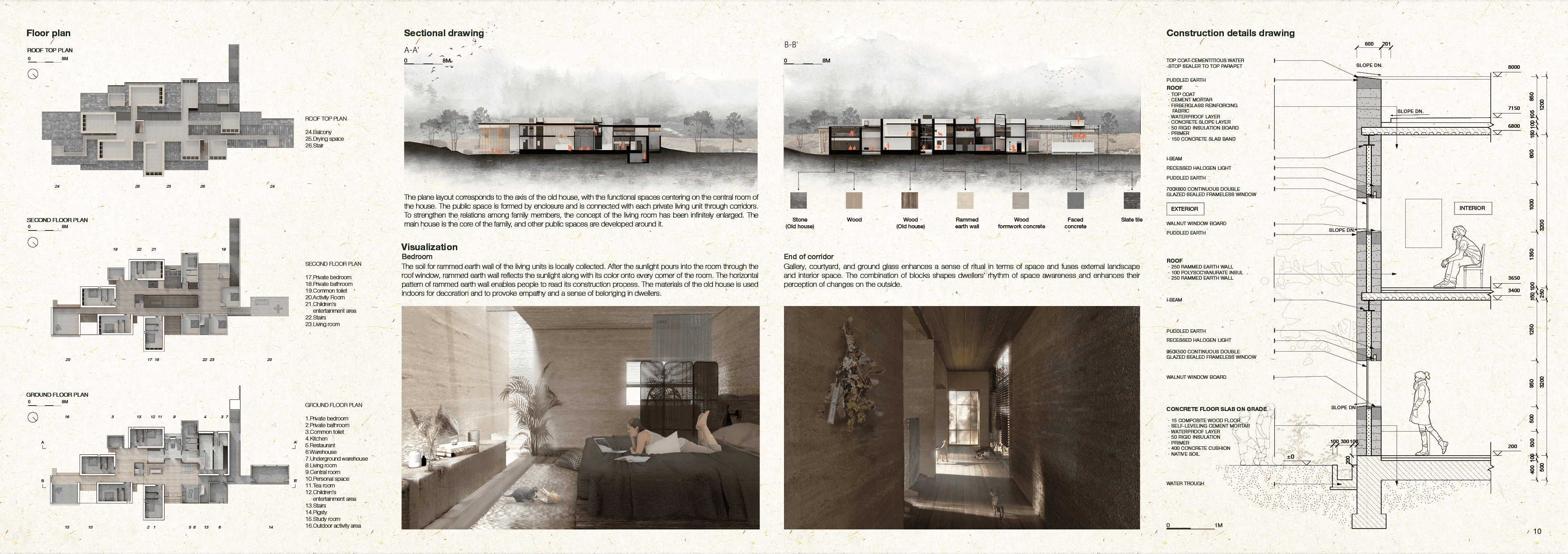
Between Families ultimately proposes a dwelling model for coexistence after fragmentation. It redefines home as something more than cohabitation: a place that allows inheritance, temporary reunion, individual difference, and everyday negotiation to coexist. In this sense, the project does not attempt to restore an idealised past, but to construct a new spatial framework through which extended family bonds can continue under changed social realities.
Between Families ultimately proposes a dwelling model for coexistence after fragmentation. It redefines home as something more than cohabitation: a place that allows inheritance, temporary reunion, individual difference, and everyday negotiation to coexist. In this sense, the project does not attempt to restore an idealised past, but to construct a new spatial framework through which extended family bonds can continue under changed social realities.