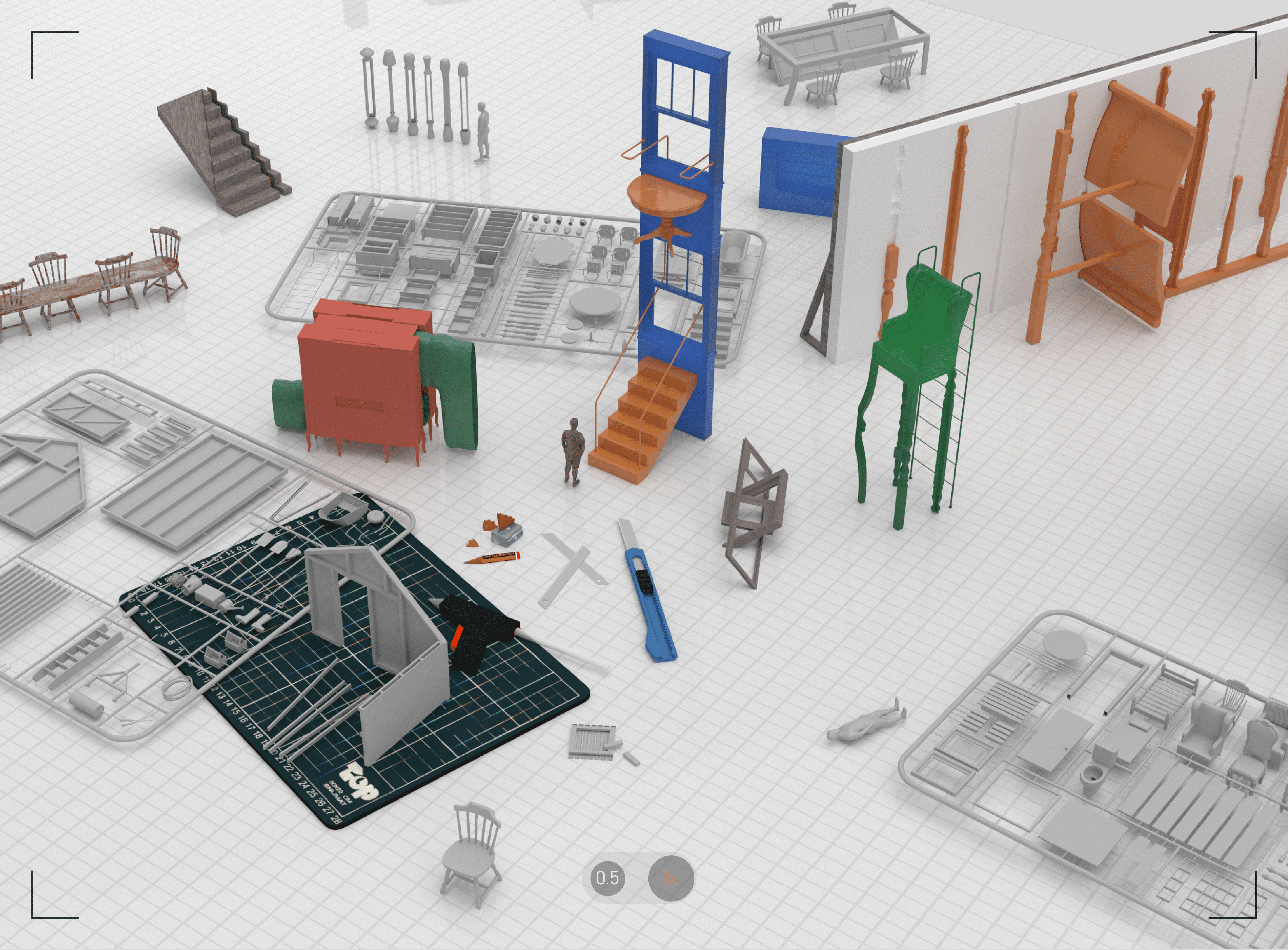
Parallel Infusion I
Categories
Interior Design, Speculative Design
Collaborators
Solo Project
Material
Digital
Keywords
Future of Food Embodied Experience Interior Ritual Speculative Narrative Sensory Space Charleston House
Year
2023
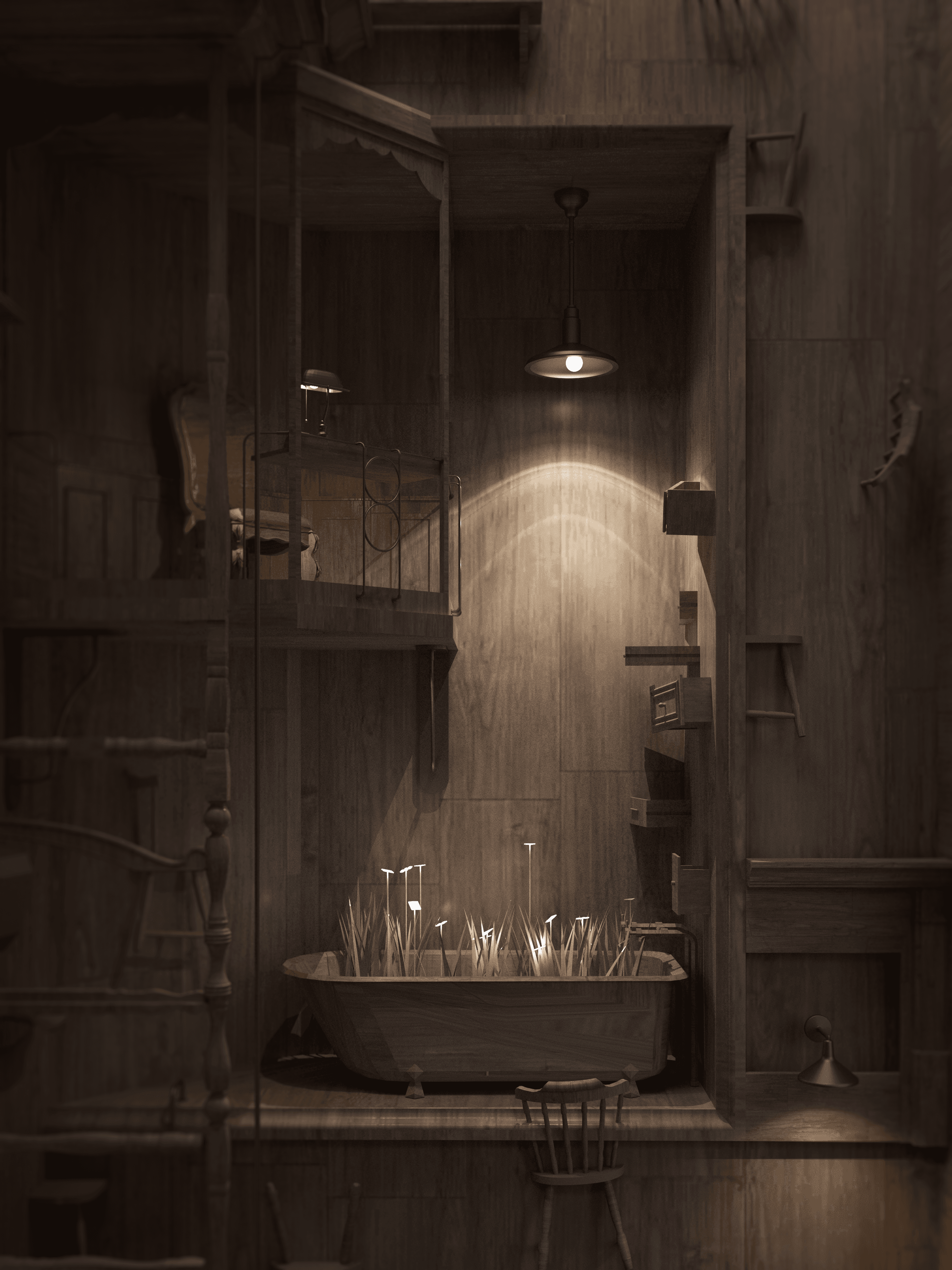
Parallel Infusion set in the speculative context of 2052, the project asks how interior space might change when food is reduced to a highly efficient form of fuel, and what kinds of spatial, sensory, and cultural rituals could bring experience back into everyday nourishment. Developed through installation, narrative staging, and spatial design, the project reimagines Charleston House as a site where consumption becomes a bodily and aesthetic act again, resisting a future defined solely by standardisation and efficiency.
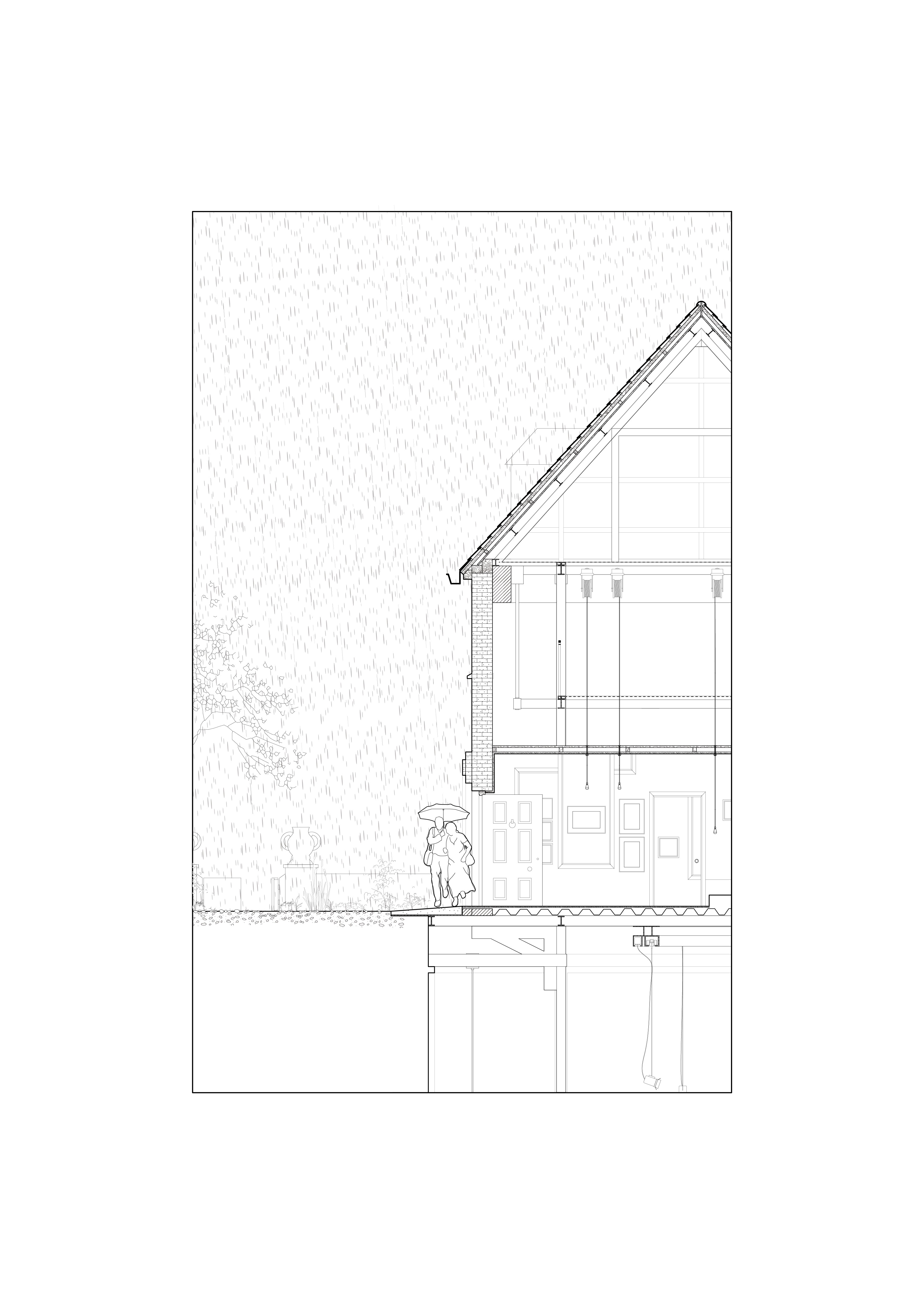
Parallel Infusion set in the speculative context of 2052, the project asks how interior space might change when food is reduced to a highly efficient form of fuel, and what kinds of spatial, sensory, and cultural rituals could bring experience back into everyday nourishment. Developed through installation, narrative staging, and spatial design, the project reimagines Charleston House as a site where consumption becomes a bodily and aesthetic act again, resisting a future defined solely by standardisation and efficiency.
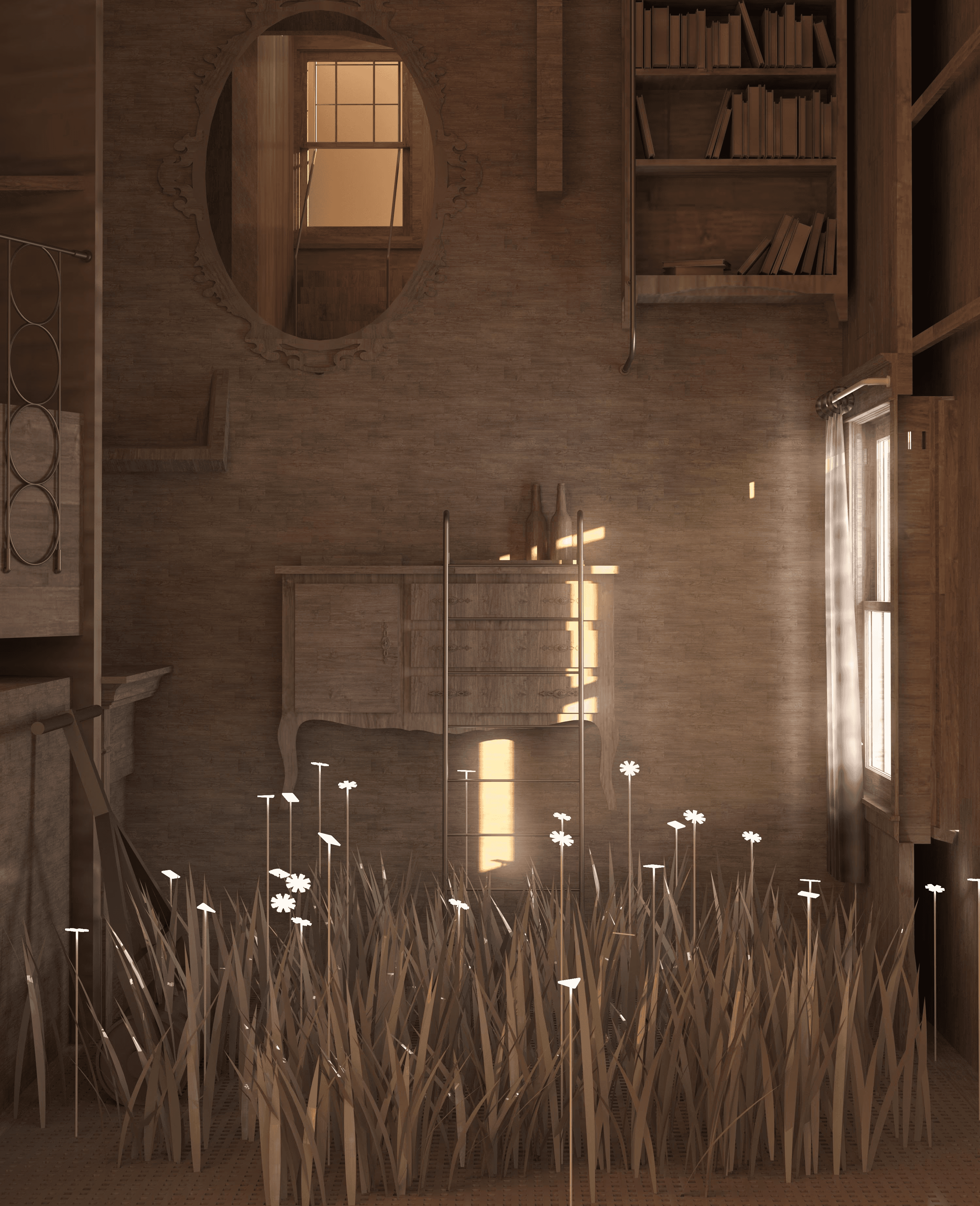
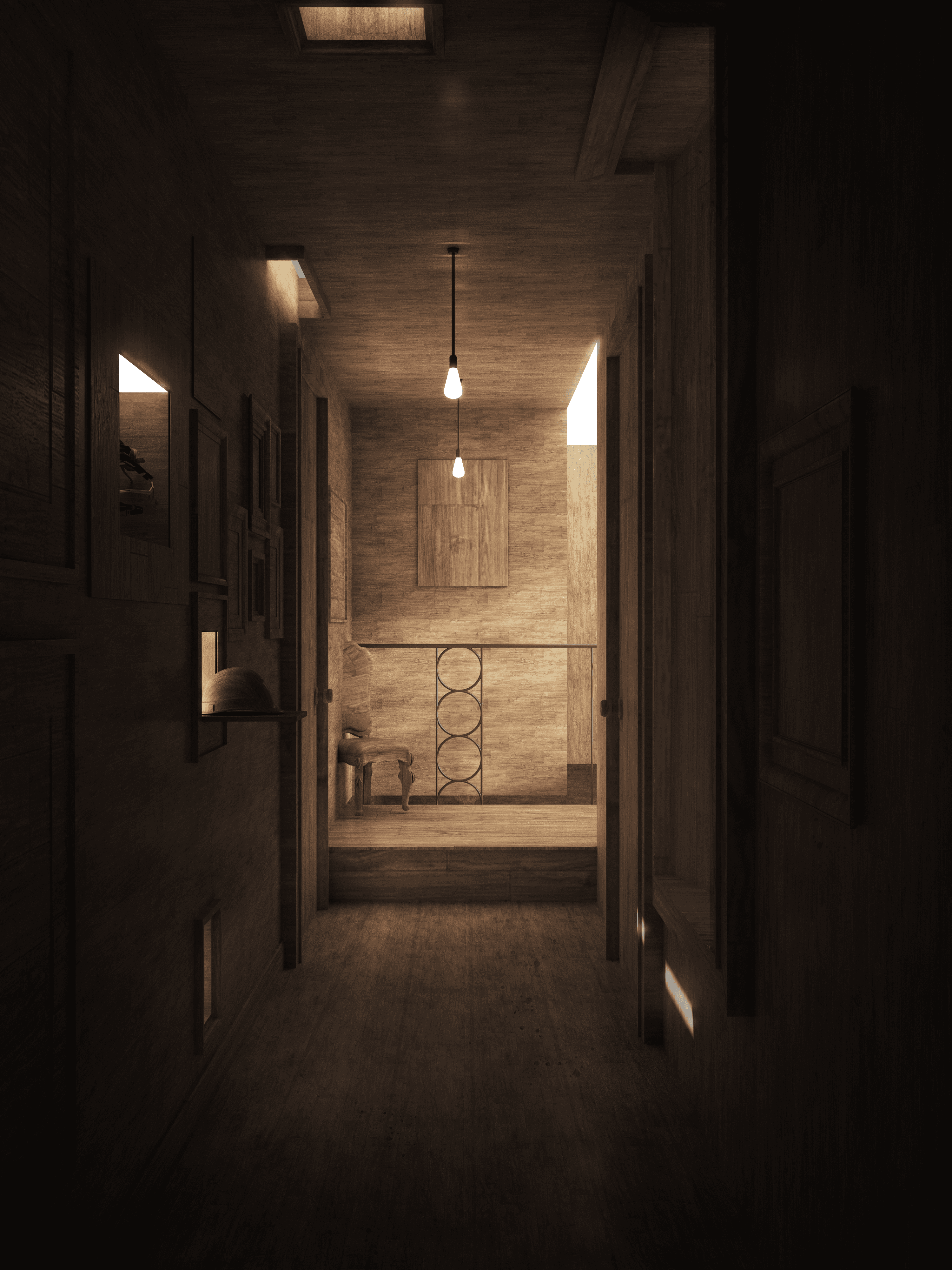
In 2052, in a world where food has been transformed into an ultra-efficient substance optimized for speed, control, and performance. Against this condition, the project asks what is lost when nourishment is detached from ritual, sensuality, and cultural experience, and whether interior space can become a medium for restoring these dimensions.
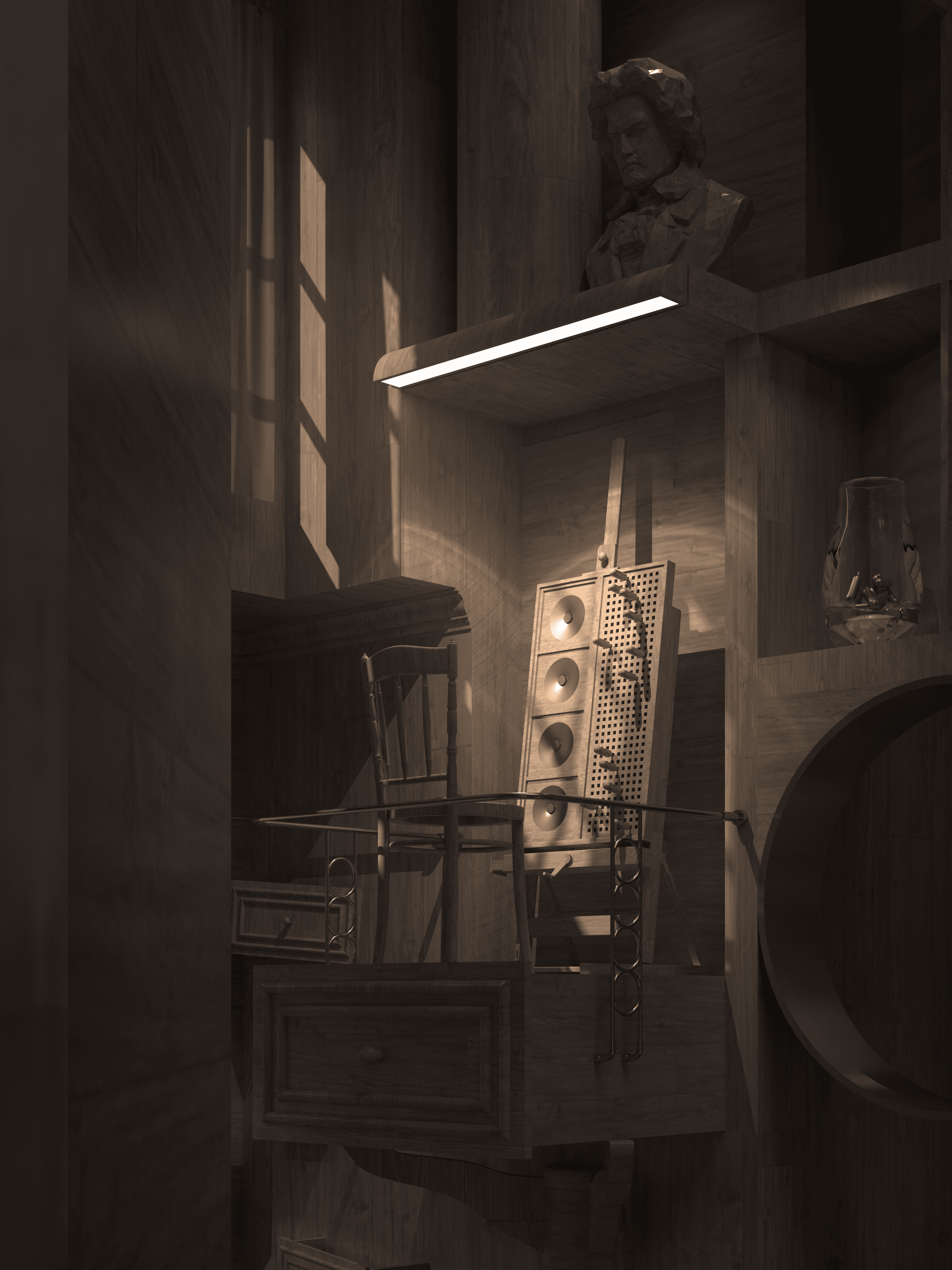
In 2052, in a world where food has been transformed into an ultra-efficient substance optimized for speed, control, and performance. Against this condition, the project asks what is lost when nourishment is detached from ritual, sensuality, and cultural experience, and whether interior space can become a medium for restoring these dimensions.

Using Charleston House as the narrative and spatial point of departure, the project constructs a new interior ritual around food. A sequence involving entry, harvesting pills, seeking flavours, and infusing personal food units with the atmosphere of Charleston. I treated space not simply as a backdrop, but as an active apparatus for staging movement, posture, perception, and transformation. Through this sequence, consumption shifts from a neutral act of intake into a choreographed encounter between body, memory, and environment.
The project is ultimately a critique of futures shaped only by efficiency. Rather than accepting optimisation as the inevitable direction of food culture, Parallel Infusion proposes another possibility: one in which interiors can preserve ambiguity, sensuality, and emotional depth. It reflects my broader interest in how space, narrative, materials, and bodily experience can work together to resist flattening logics and generate alternative ways of living.
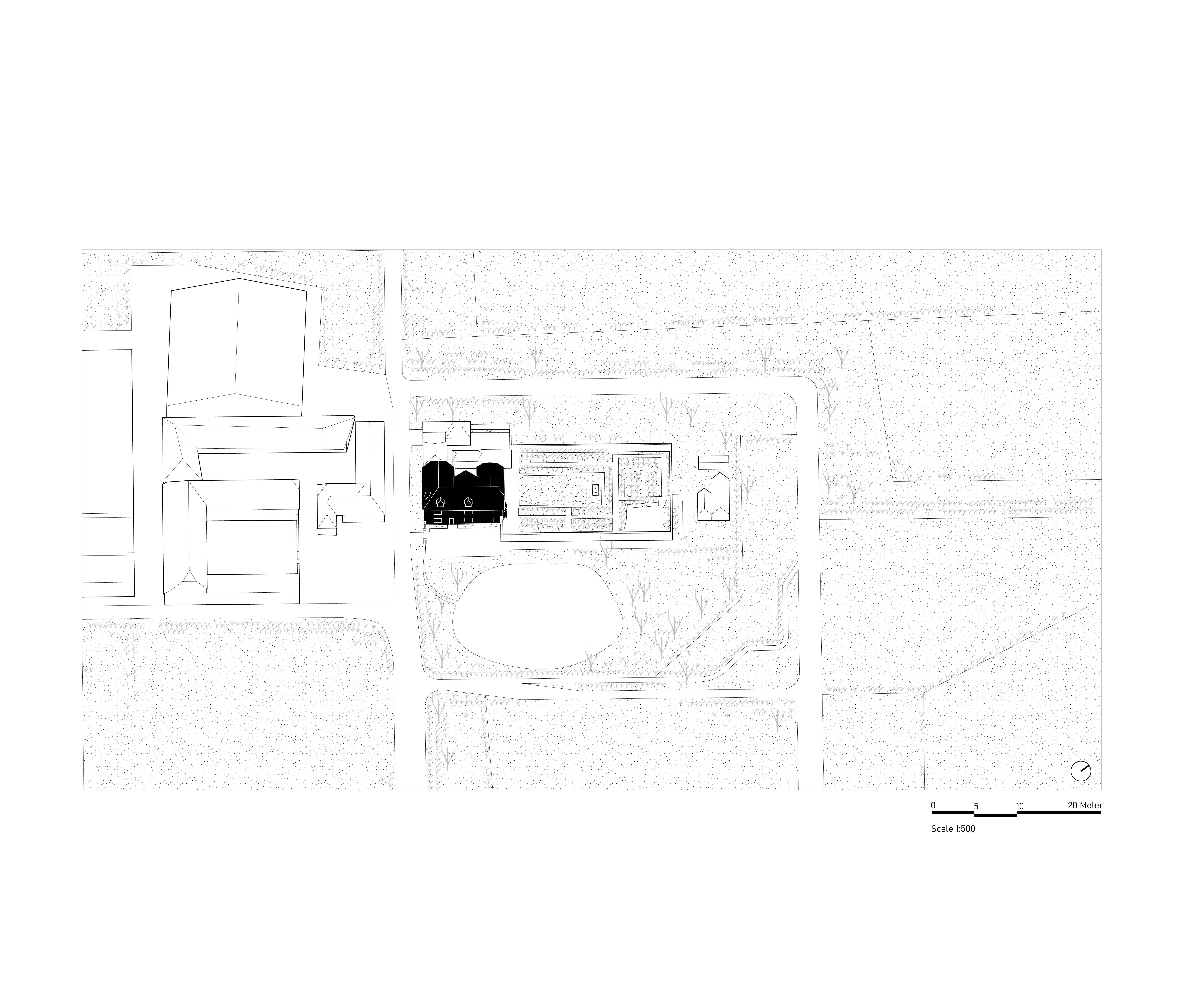
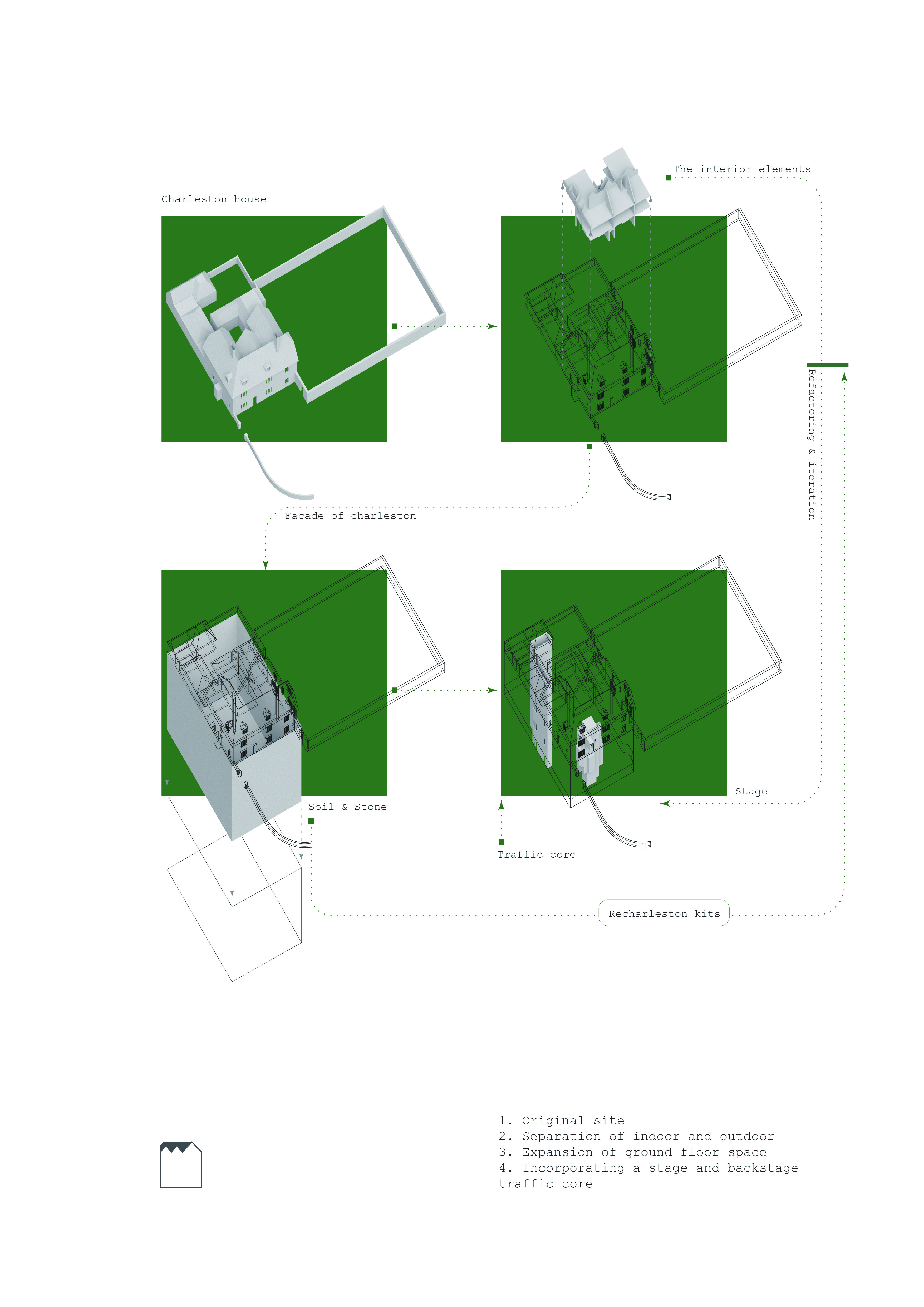
Using Charleston House as the narrative and spatial point of departure, the project constructs a new interior ritual around food. A sequence involving entry, harvesting pills, seeking flavours, and infusing personal food units with the atmosphere of Charleston. I treated space not simply as a backdrop, but as an active apparatus for staging movement, posture, perception, and transformation. Through this sequence, consumption shifts from a neutral act of intake into a choreographed encounter between body, memory, and environment.
The project is ultimately a critique of futures shaped only by efficiency. Rather than accepting optimisation as the inevitable direction of food culture, Parallel Infusion proposes another possibility: one in which interiors can preserve ambiguity, sensuality, and emotional depth. It reflects my broader interest in how space, narrative, materials, and bodily experience can work together to resist flattening logics and generate alternative ways of living.