After Food: Culinapills and Forbidden Appetites
Categories
Speculative Design, Worldbuilding
Collaborators
Solo Project
Material
Multimedia
Keywords
Future Food Ritual Prohibition Culinapills Poaching Worldbuilding
Year
2022
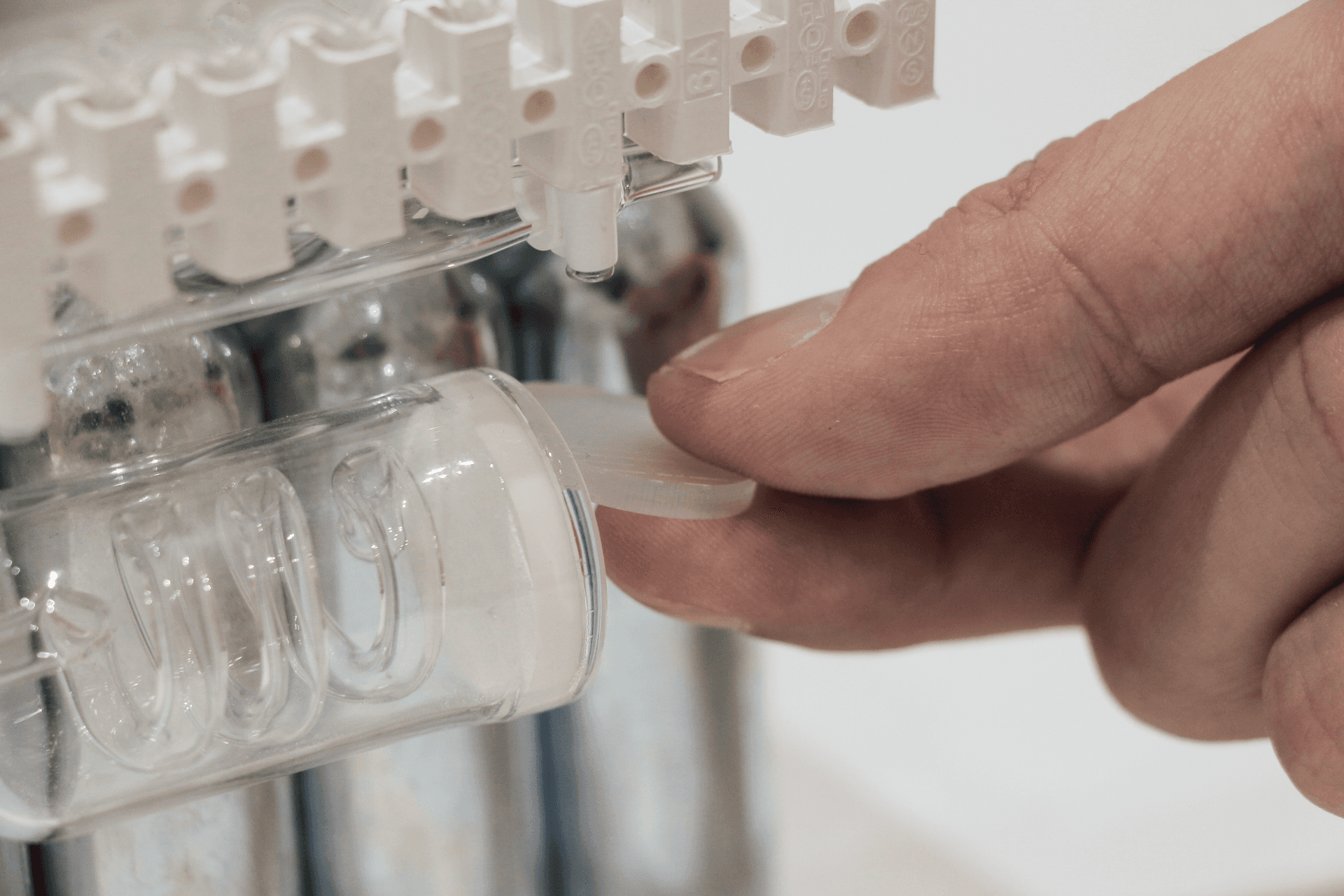
In 2052, Purefood becomes the world’s leading food company by redefining food as a programmable sensory system. Its flagship product, Culinapills 1.0, transforms eating into a controllable combination of texture and flavour. Texture is embedded into nutritional pills, while flavour is stored separately and released through the flavor controller. With a simple movement of the finger, users can select, combine, and activate their desired food experience in real time. In this future, kitchens, restaurants, and even dining tables begin to disappear, as food becomes an interface rather than a meal.
Purefood does not simply manufacture edible products; it produces a new food culture. By separating flavour from texture and replacing preparation with instant control, the company reorganises not only nourishment but also the rituals surrounding eating. Cooking becomes obsolete, dining becomes individualised, and the traditional social settings of food are gradually replaced by personalised systems of access and consumption. What Purefood sells is not only food, but the promise of total control over appetite.
In 2052, Purefood becomes the world’s leading food company by redefining food as a programmable sensory system. Its flagship product, Culinapills 1.0, transforms eating into a controllable combination of texture and flavour. Texture is embedded into nutritional pills, while flavour is stored separately and released through the flavor controller. With a simple movement of the finger, users can select, combine, and activate their desired food experience in real time. In this future, kitchens, restaurants, and even dining tables begin to disappear, as food becomes an interface rather than a meal.
Purefood does not simply manufacture edible products; it produces a new food culture. By separating flavour from texture and replacing preparation with instant control, the company reorganises not only nourishment but also the rituals surrounding eating. Cooking becomes obsolete, dining becomes individualised, and the traditional social settings of food are gradually replaced by personalised systems of access and consumption. What Purefood sells is not only food, but the promise of total control over appetite.



Yet the technologisation of food does not eliminate appetite; it transforms it. In this future, carnivorism has become prohibited, turning meat into a forbidden object of desire. Against the clean and efficient regime established by Purefood, meat survives as contraband, memory, and transgression. The project therefore asks what kinds of illicit hunting tools, black-market rituals, and hidden practices would emerge when embodied hunger can no longer be fully absorbed into controlled food systems.
Yet the technologisation of food does not eliminate appetite; it transforms it. In this future, carnivorism has become prohibited, turning meat into a forbidden object of desire. Against the clean and efficient regime established by Purefood, meat survives as contraband, memory, and transgression. The project therefore asks what kinds of illicit hunting tools, black-market rituals, and hidden practices would emerge when embodied hunger can no longer be fully absorbed into controlled food systems.

A short film extends this speculative world through the capture of an illegal poacher. However, the film does not end in a conventional legal process. Instead, it introduces a new form of judgment: a networked trial that replaces the authority of the court with the logic of public exposure, digital circulation, and mass participation. Under the Purefood regime, justice no longer appears as a slow institutional procedure, but as an immediate and highly visible social performance. In this future, punishment is shaped not only by law, but by platforms, audiences, and the viral spread of moral judgment. The film therefore shows that once food becomes a system of control, transgression is no longer judged in court alone, but in the restless space of the network.
A short film extends this speculative world through the capture of an illegal poacher. However, the film does not end in a conventional legal process. Instead, it introduces a new form of judgment: a networked trial that replaces the authority of the court with the logic of public exposure, digital circulation, and mass participation. Under the Purefood regime, justice no longer appears as a slow institutional procedure, but as an immediate and highly visible social performance. In this future, punishment is shaped not only by law, but by platforms, audiences, and the viral spread of moral judgment. The film therefore shows that once food becomes a system of control, transgression is no longer judged in court alone, but in the restless space of the network.